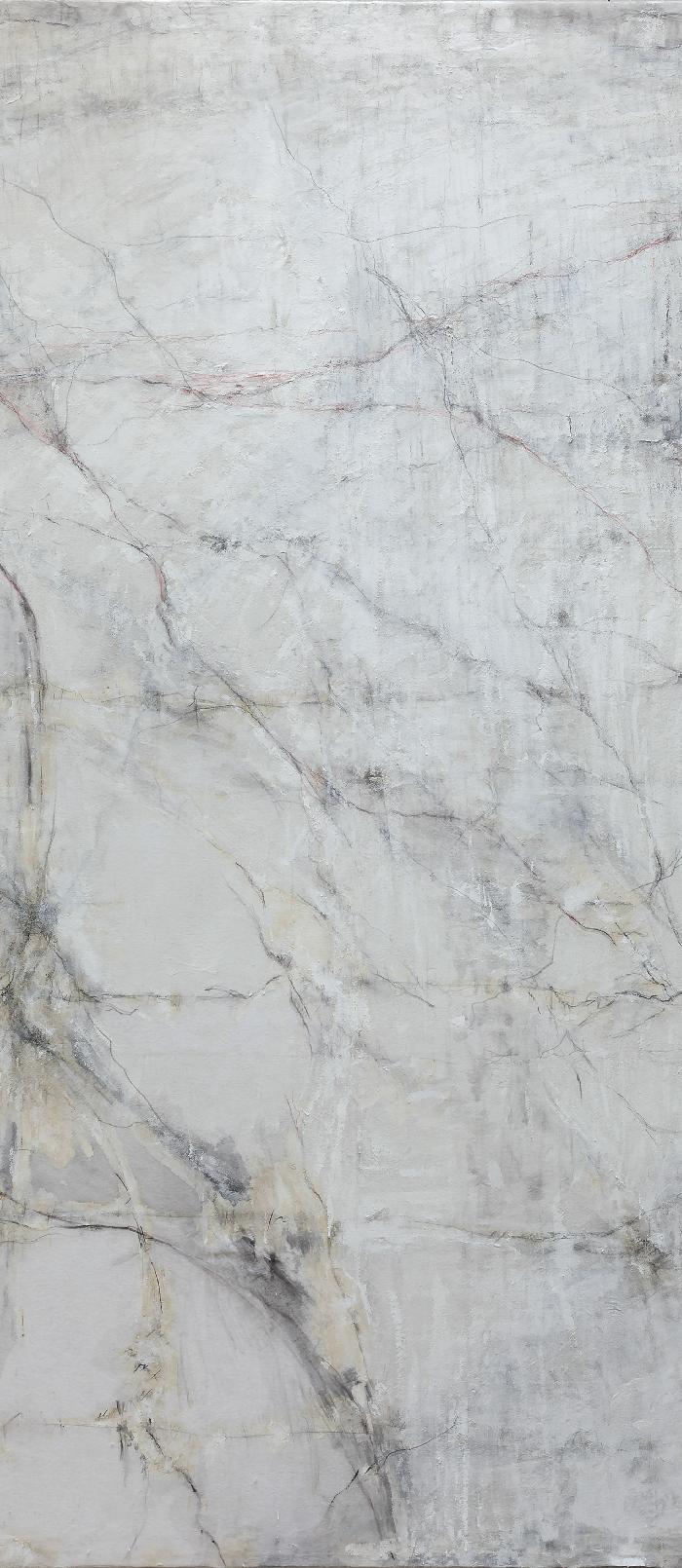
Nadine Kohn-Fiszel

Visual artist

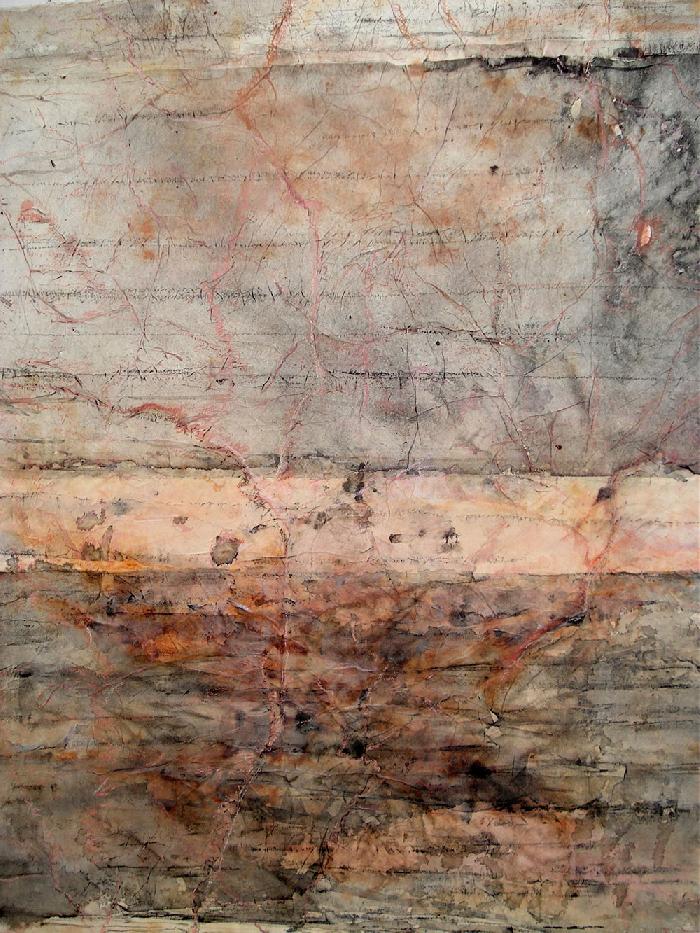
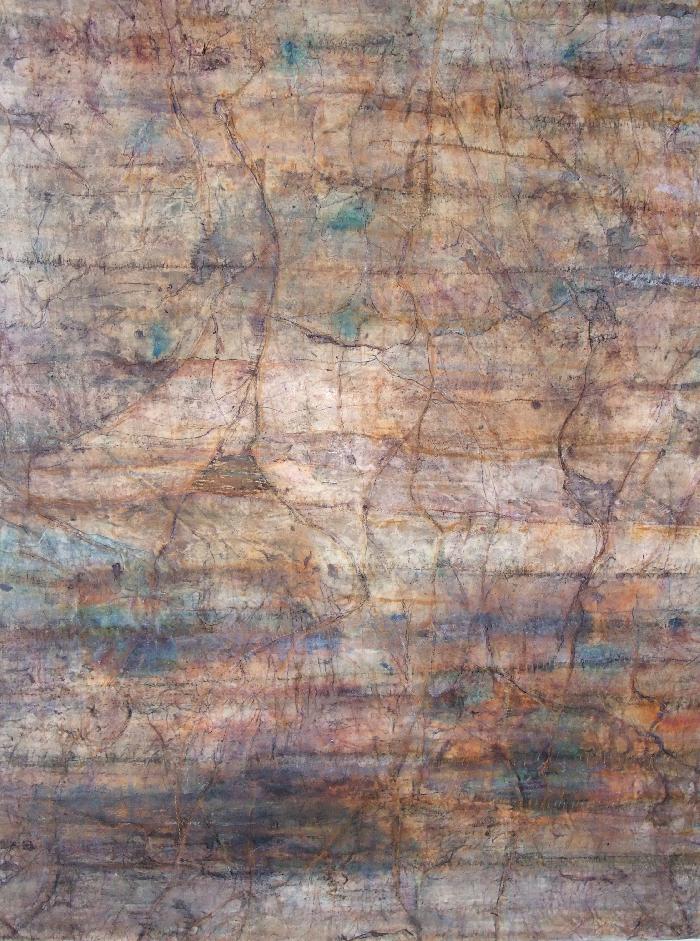
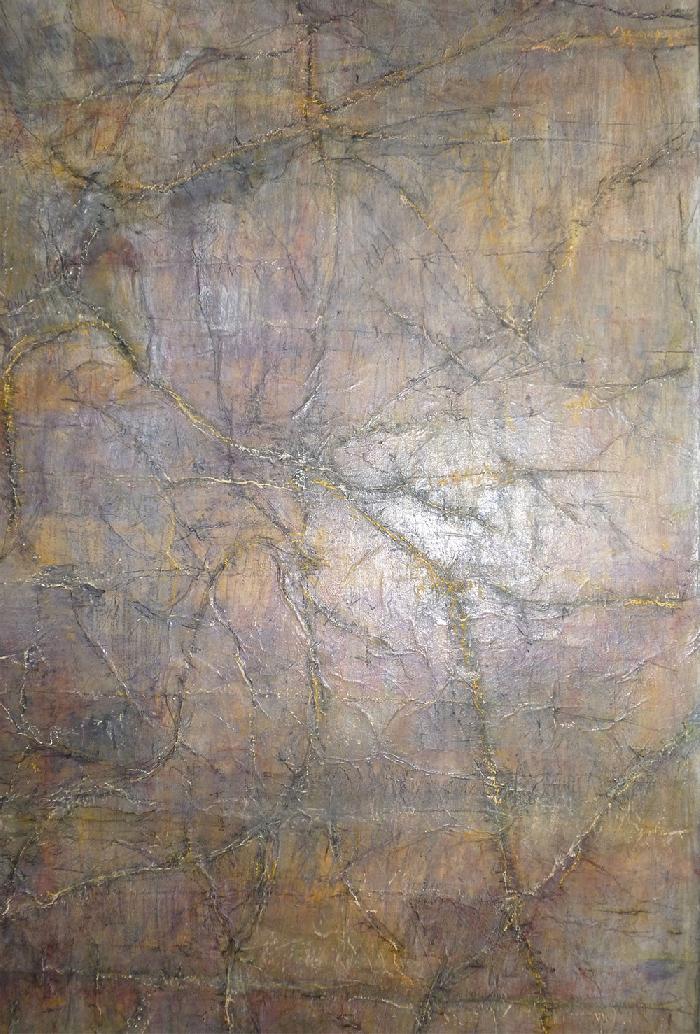
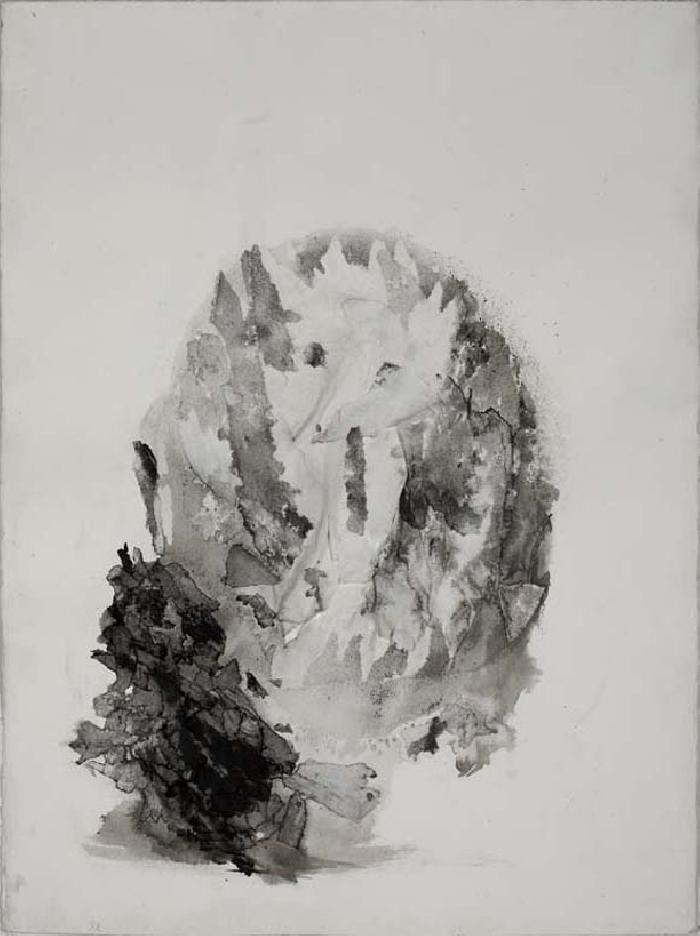
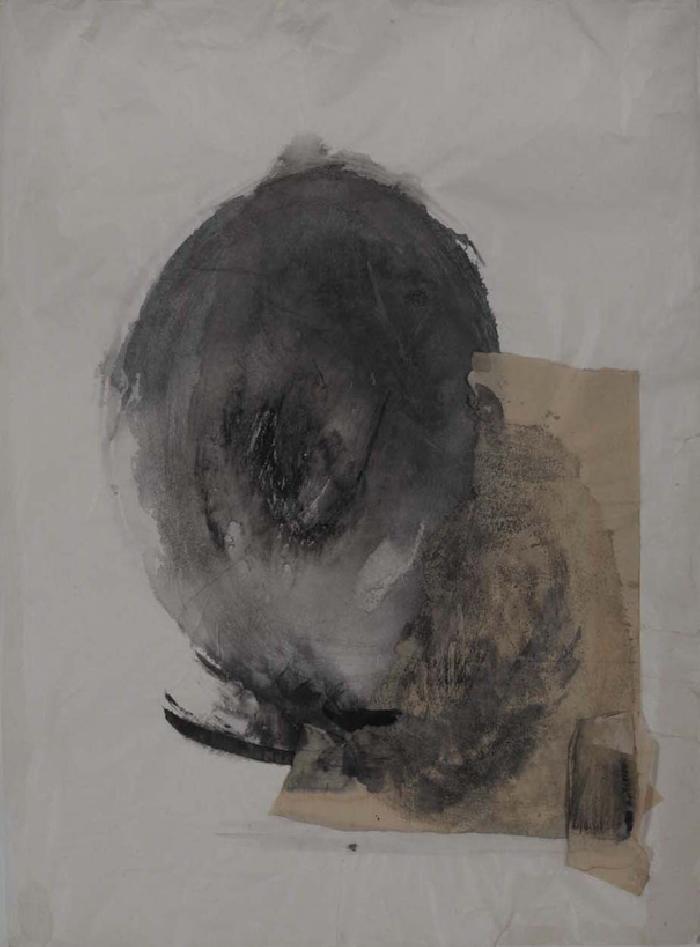
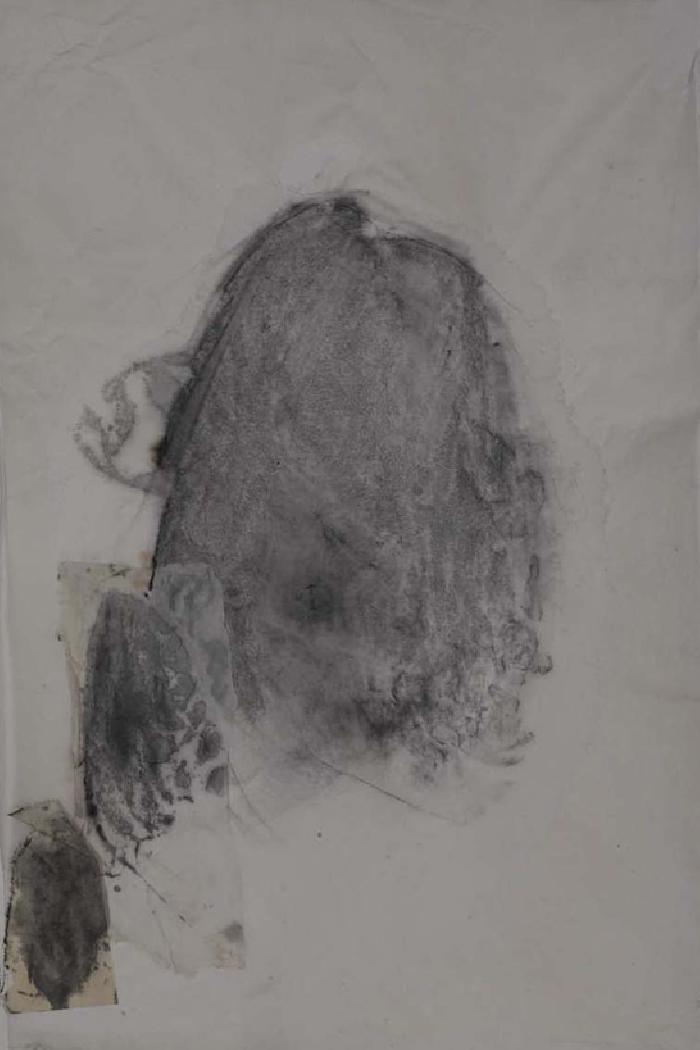
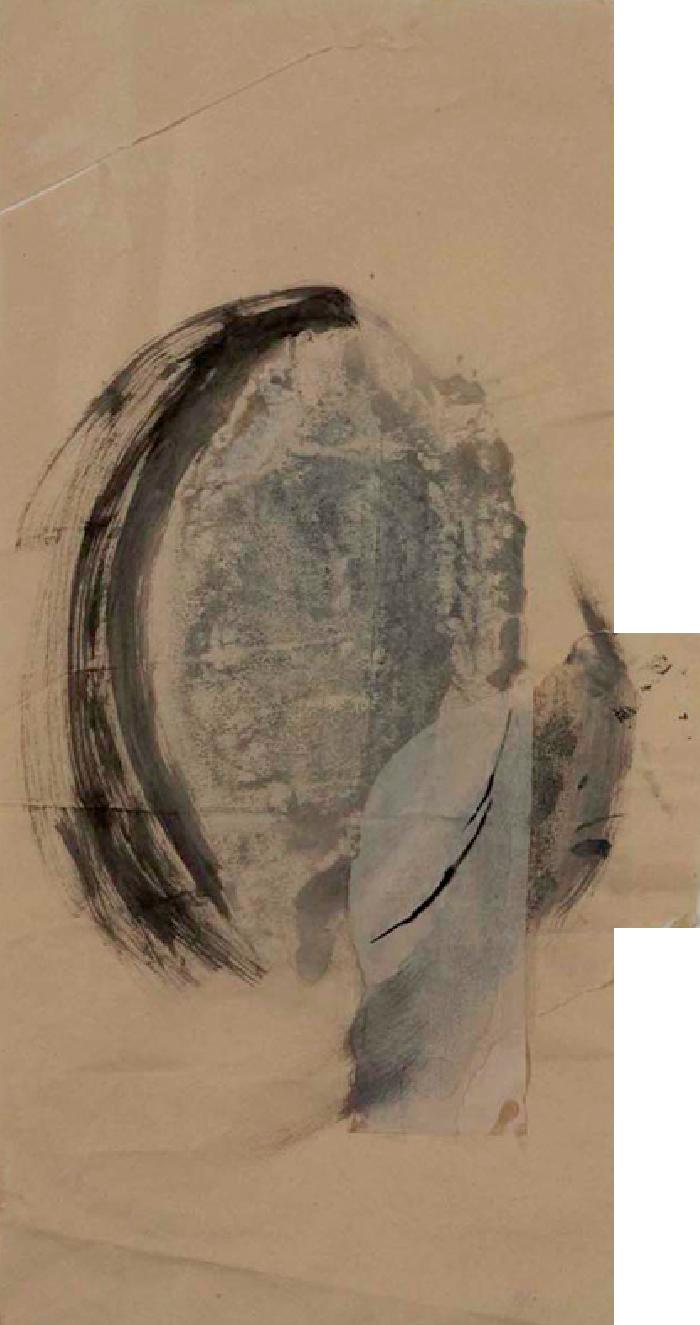
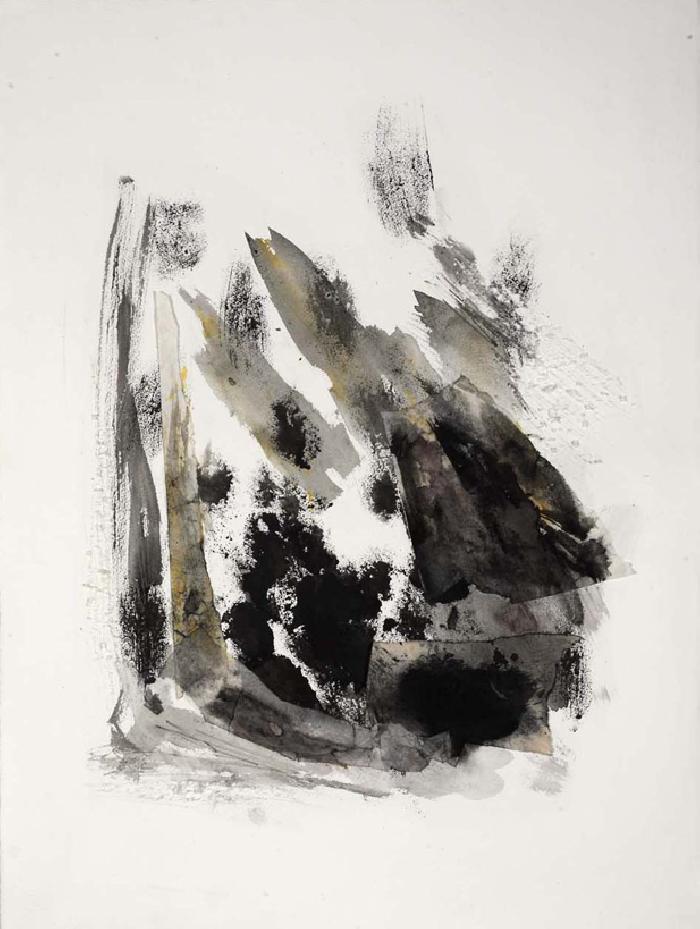
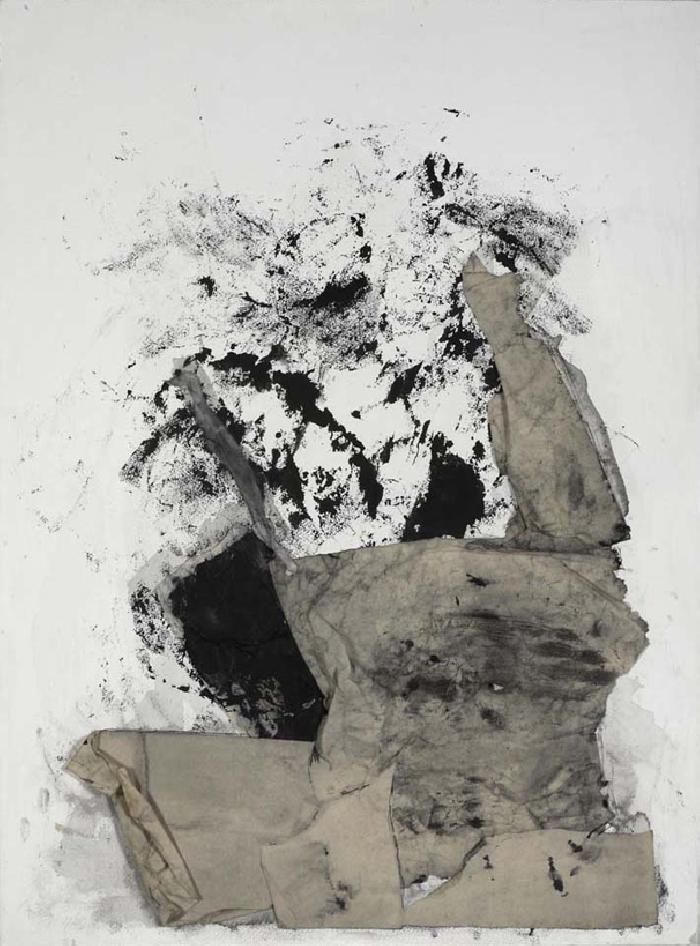
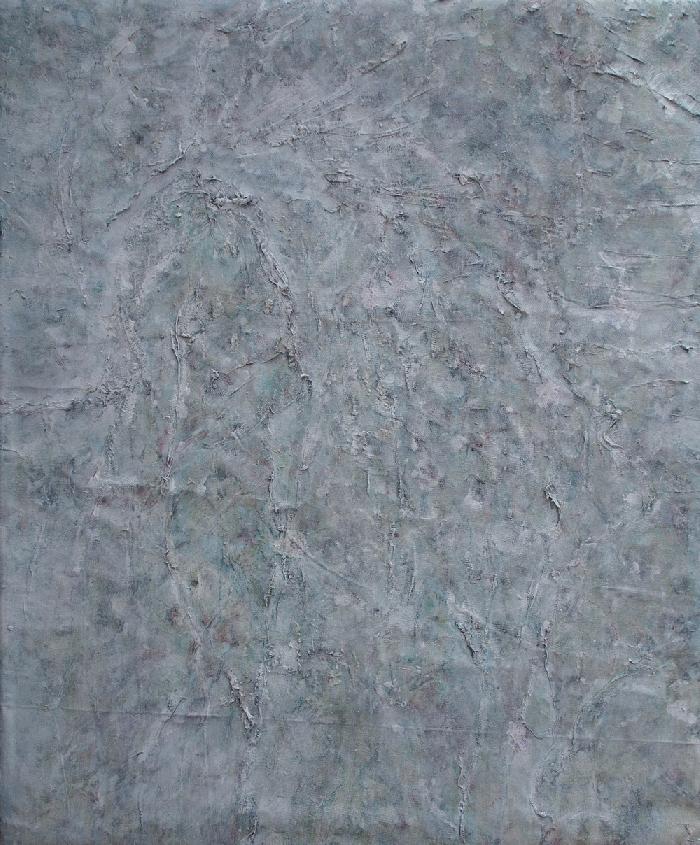
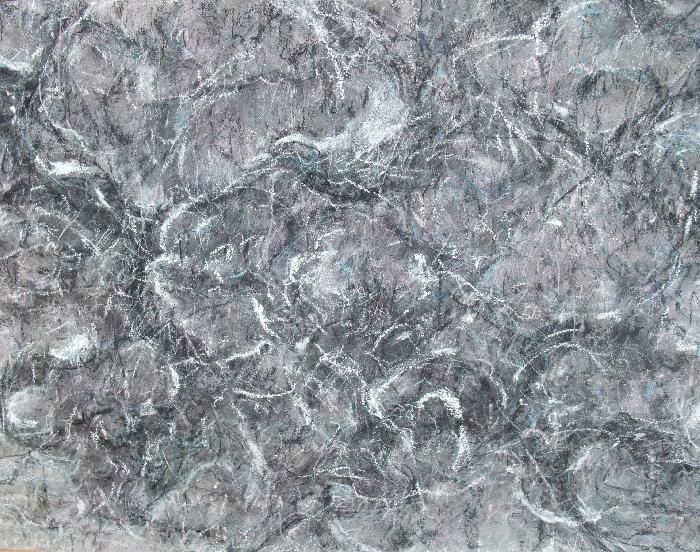
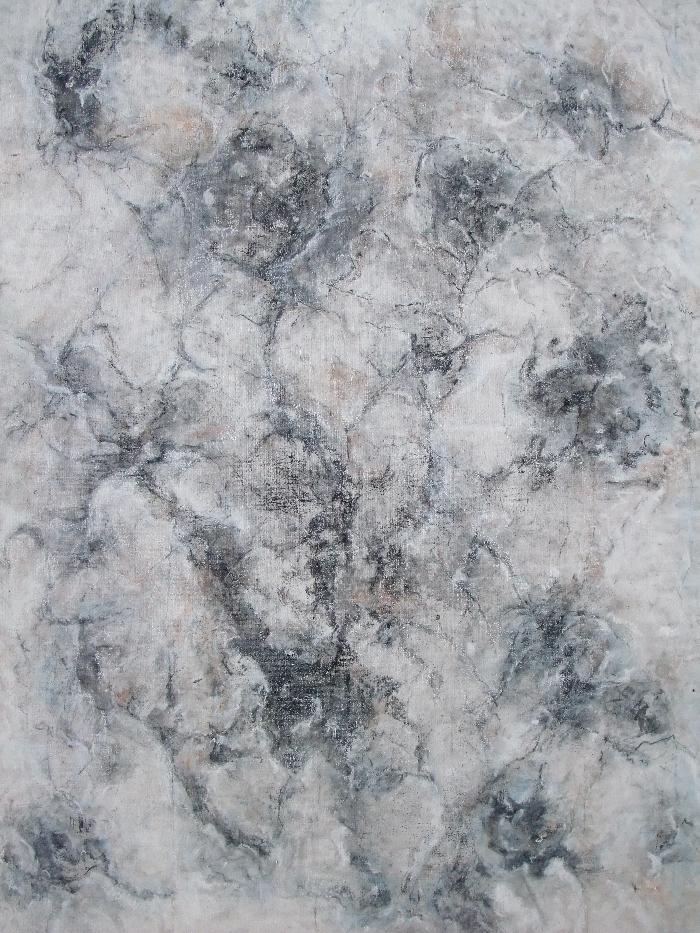
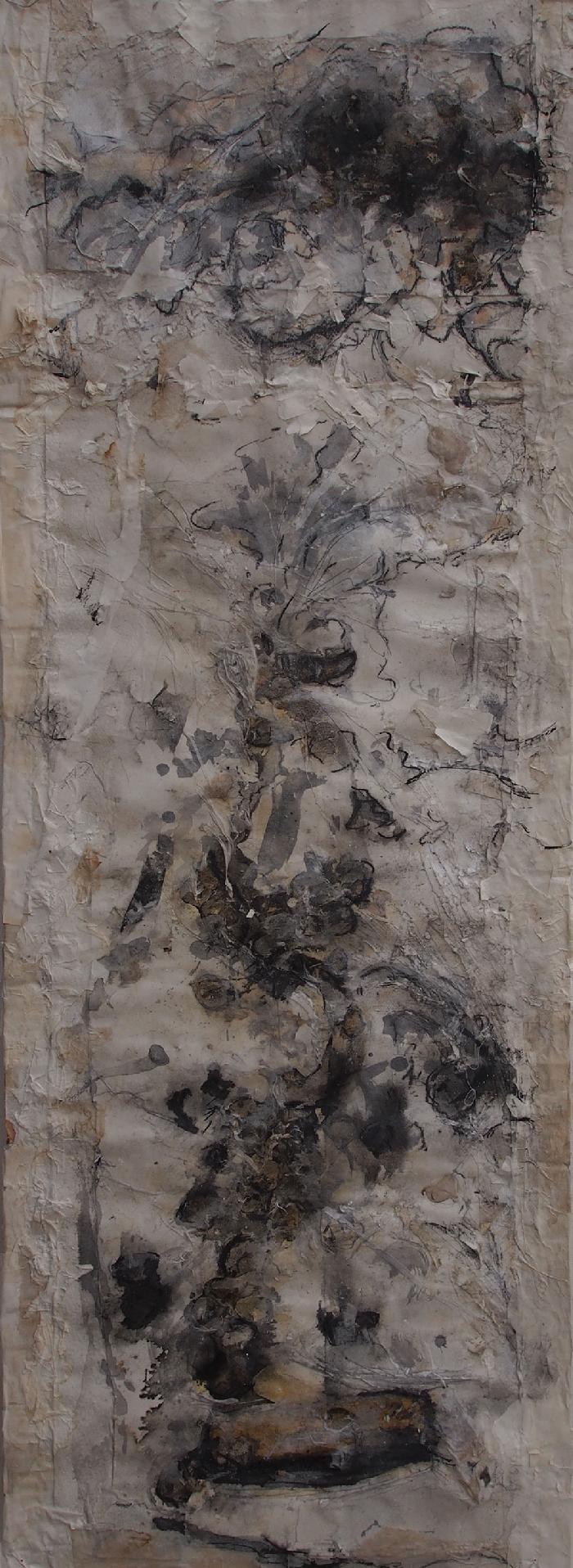
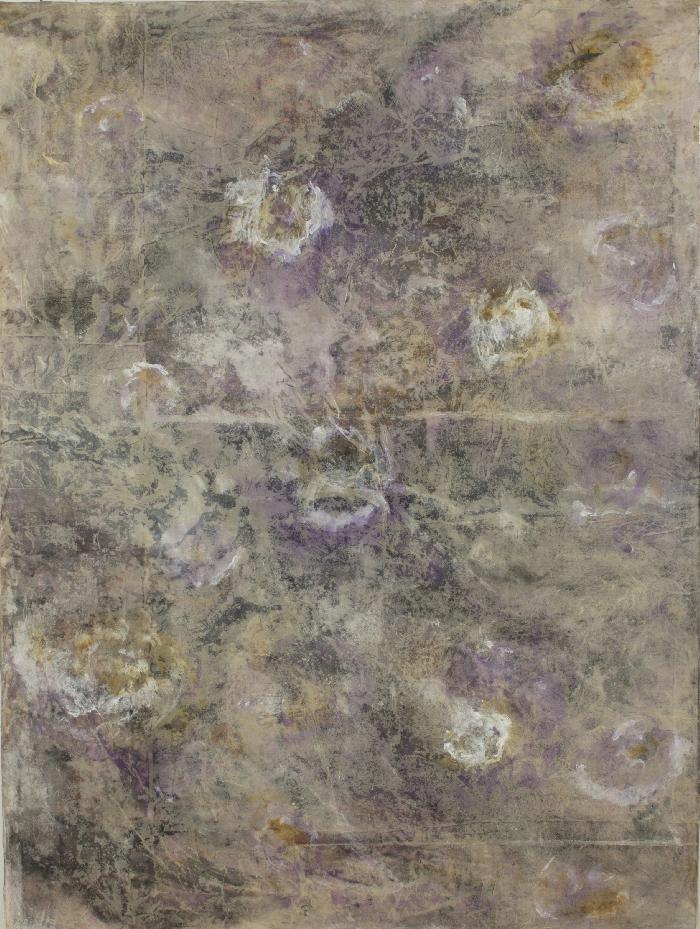
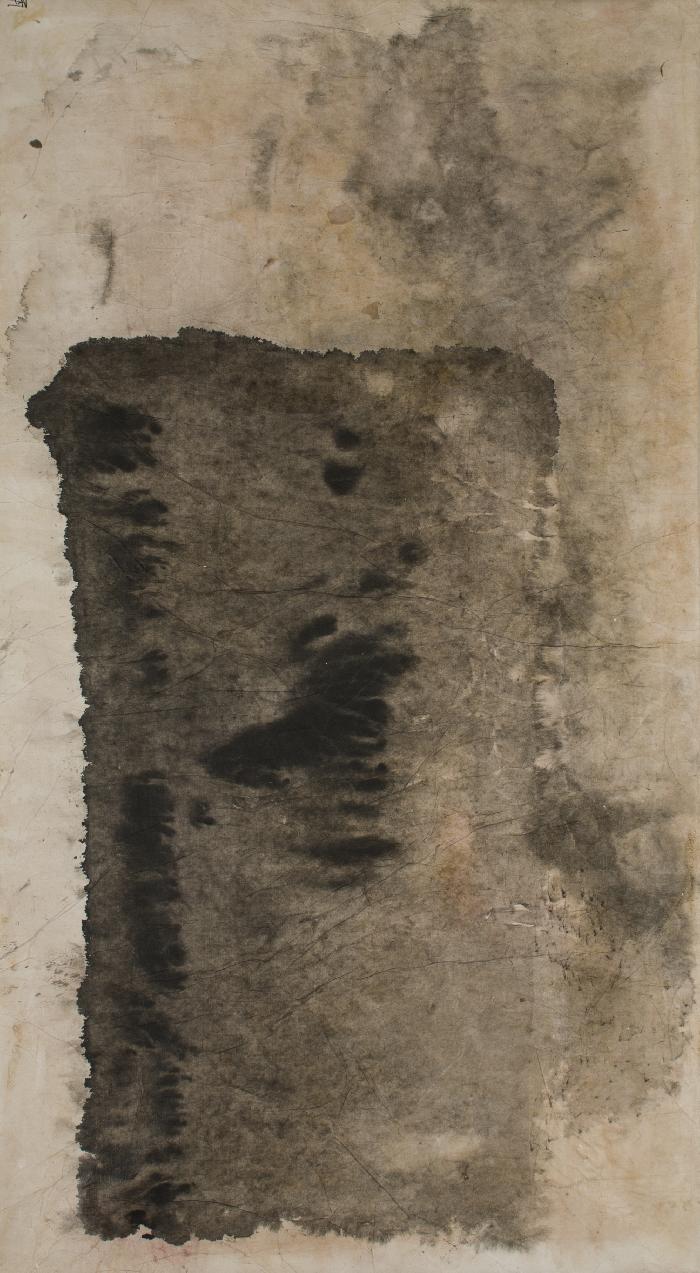
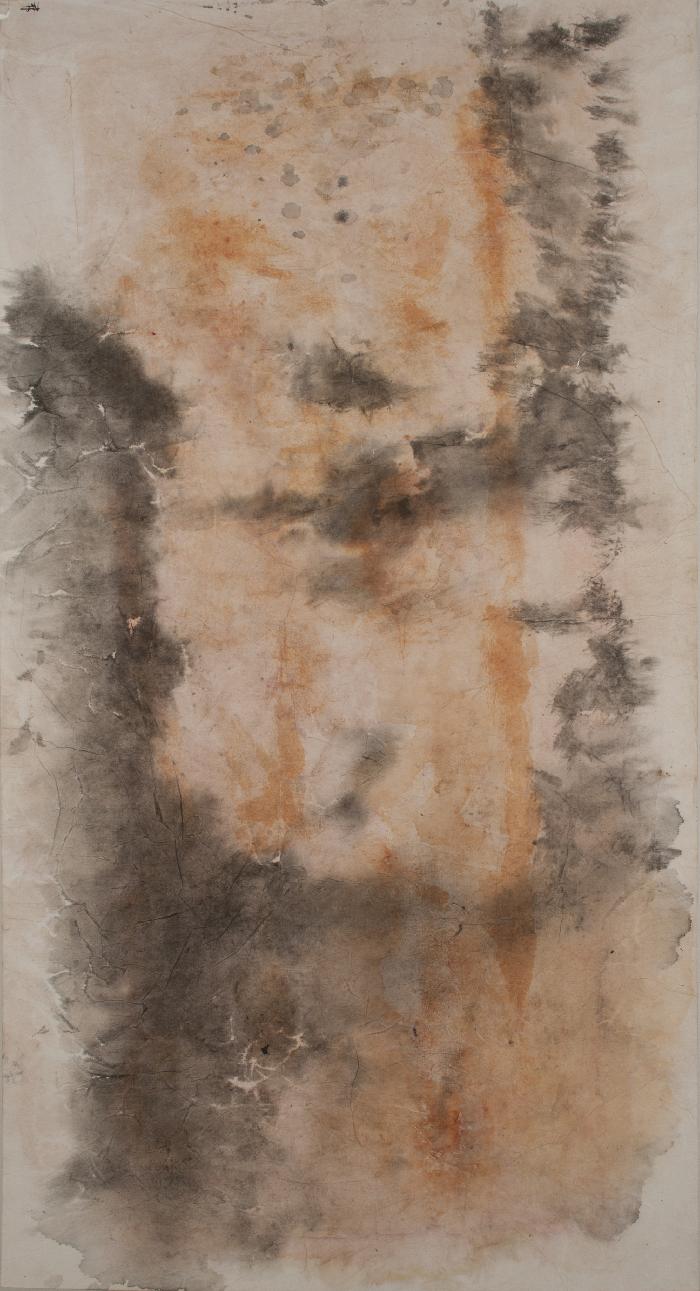
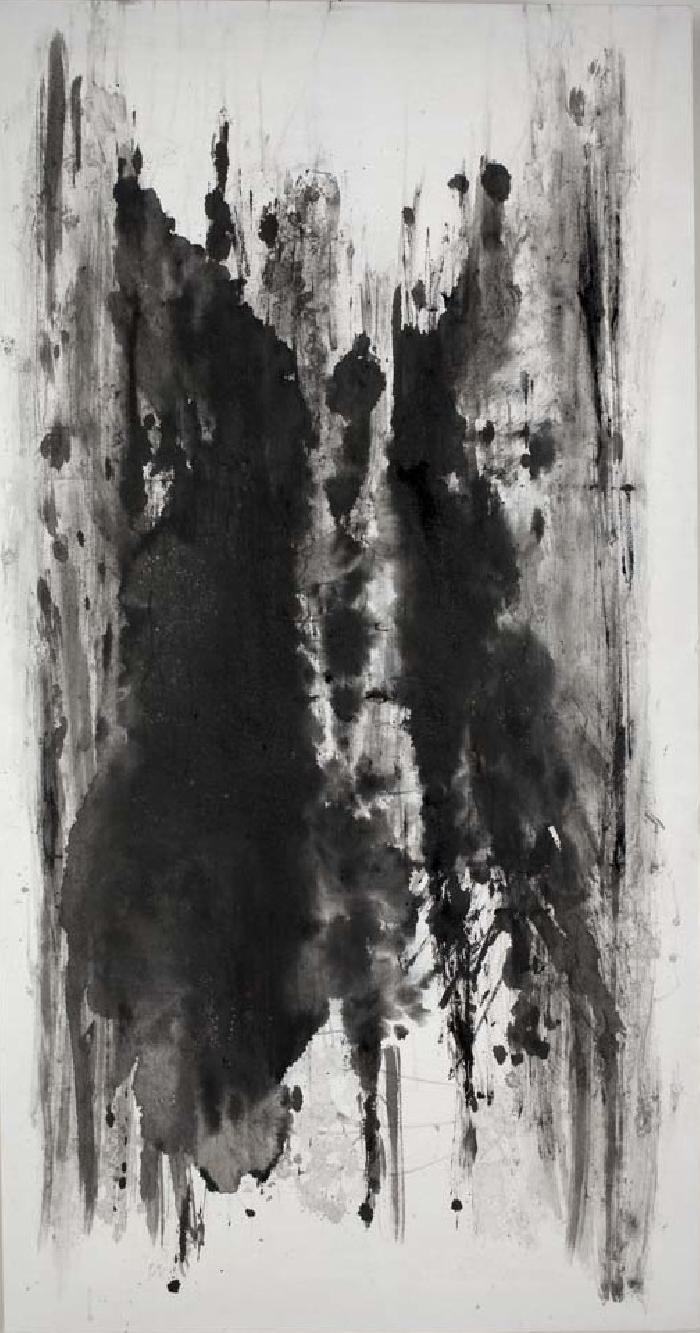
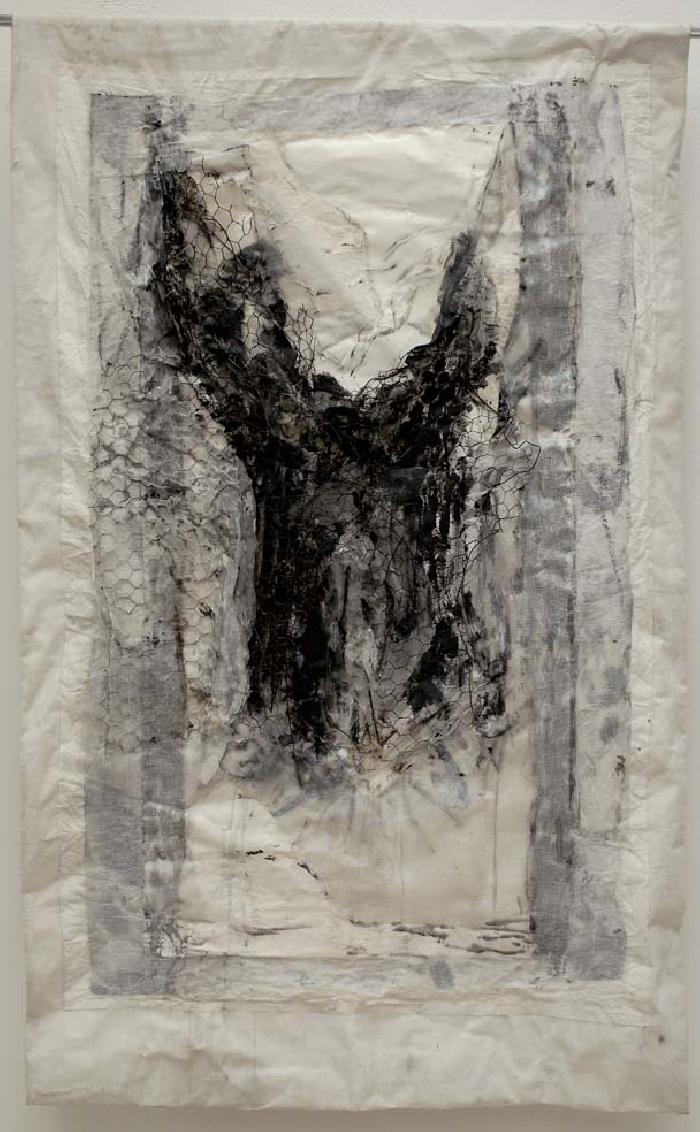
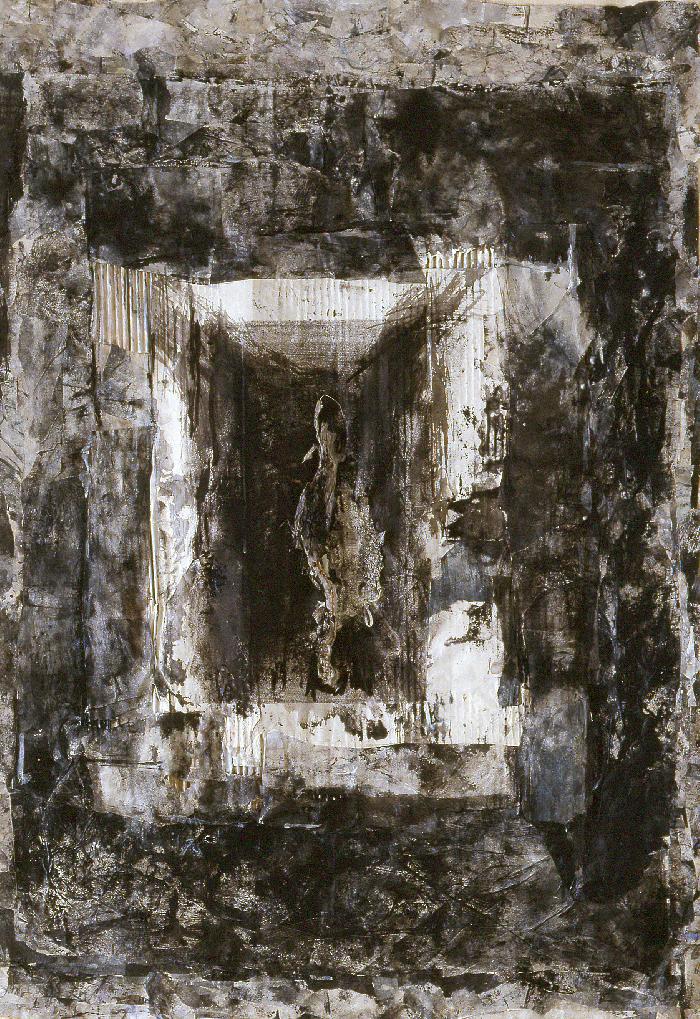
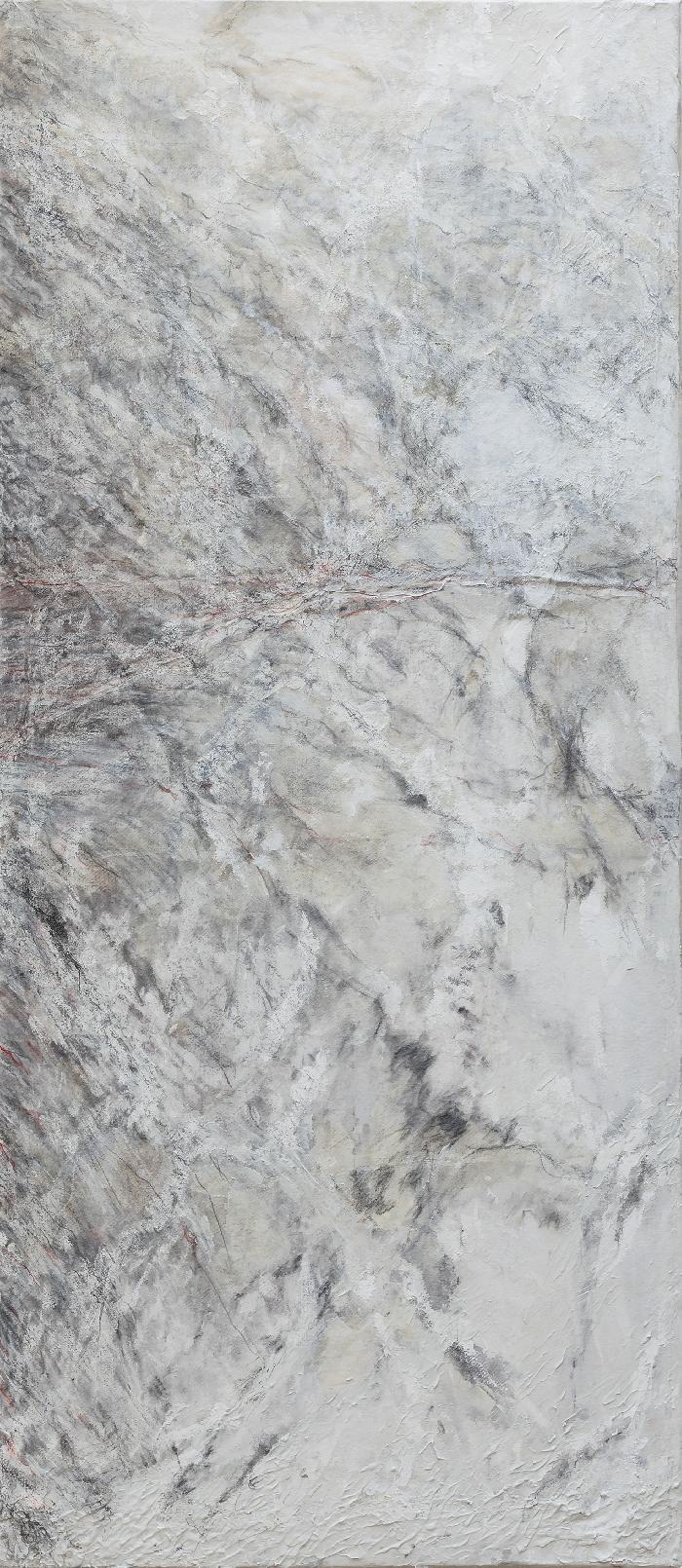
Nadine Kohn-Fiszel is a French artist whose work explores themes of the body, landscape, memory and signs.
Her work ranges from sculpture to painting, including installation and drawing.

Collection's entry

Around the landscape

8 series in this thematic

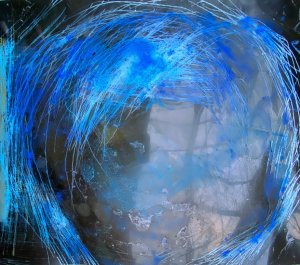
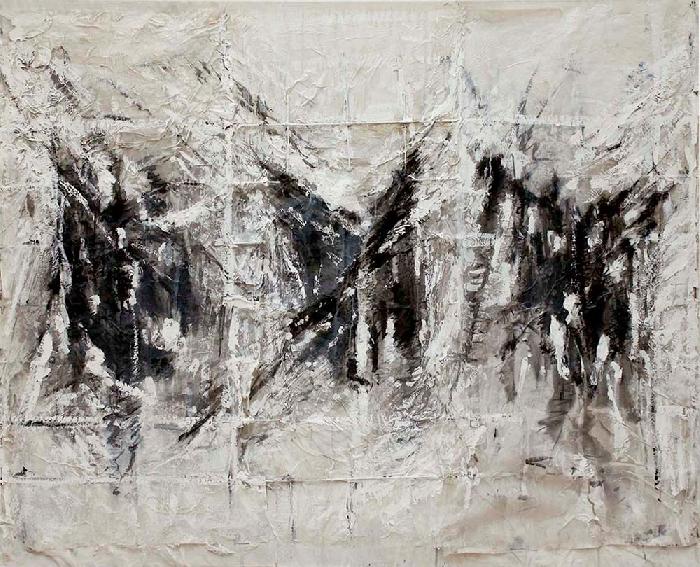
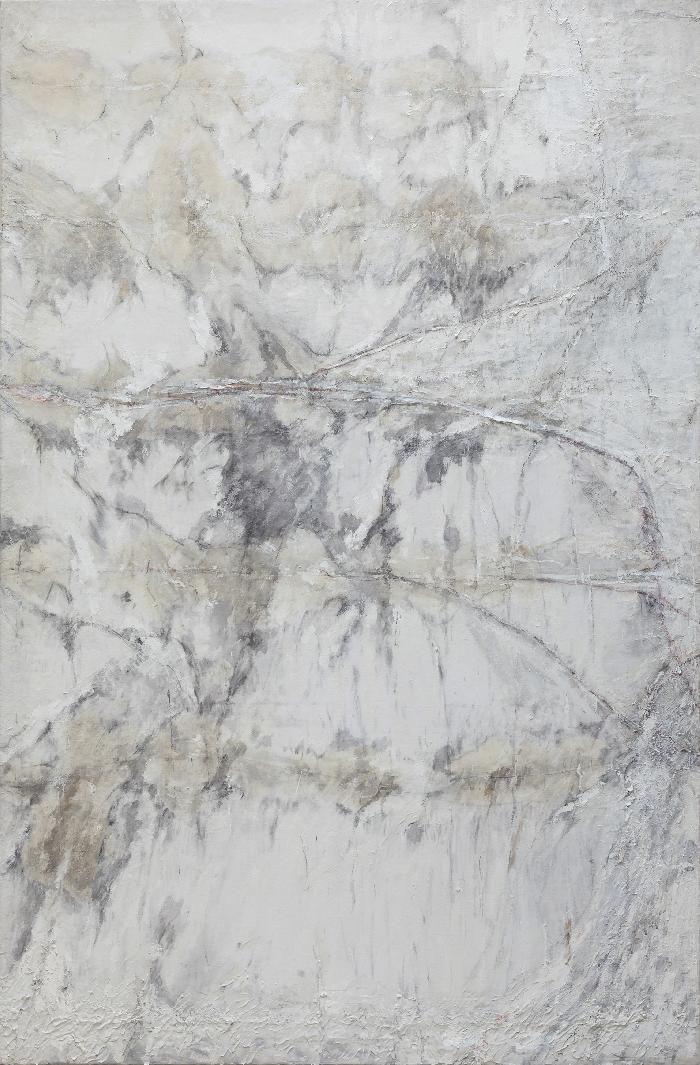
The landscape’s metamorphoses, fragility,  power, the diurnal diversity of its colors exert an incessantly renewed fascination. I believe that my thoughts where fed by the fears  of the landscape natural dissolution and the modifications engendered by man. That's where one can find my roots. This  theme constantly returns and forms the framework of several of these series.

An approach to the body

4 series in this thematic

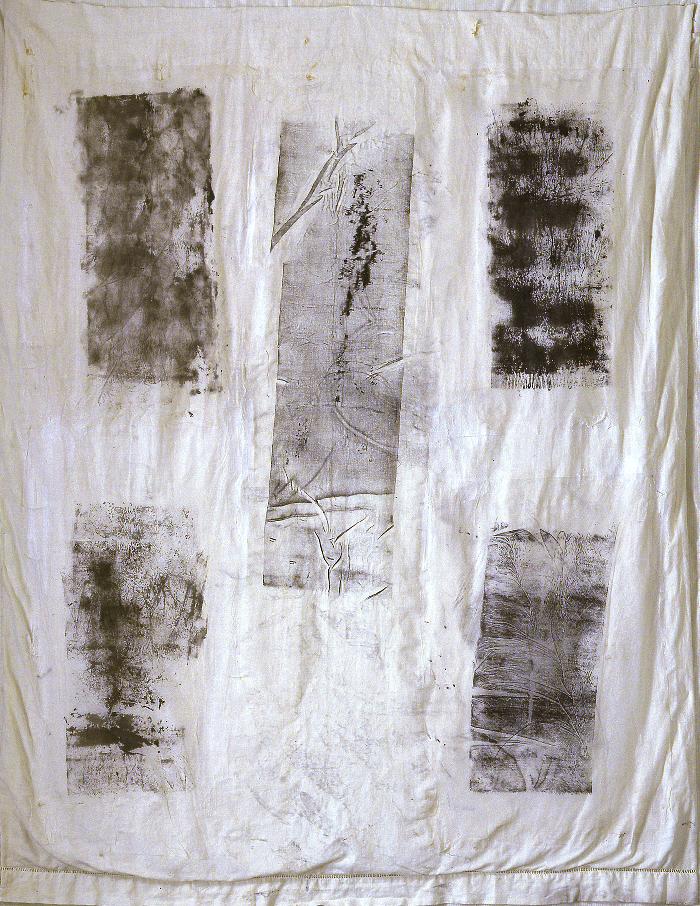
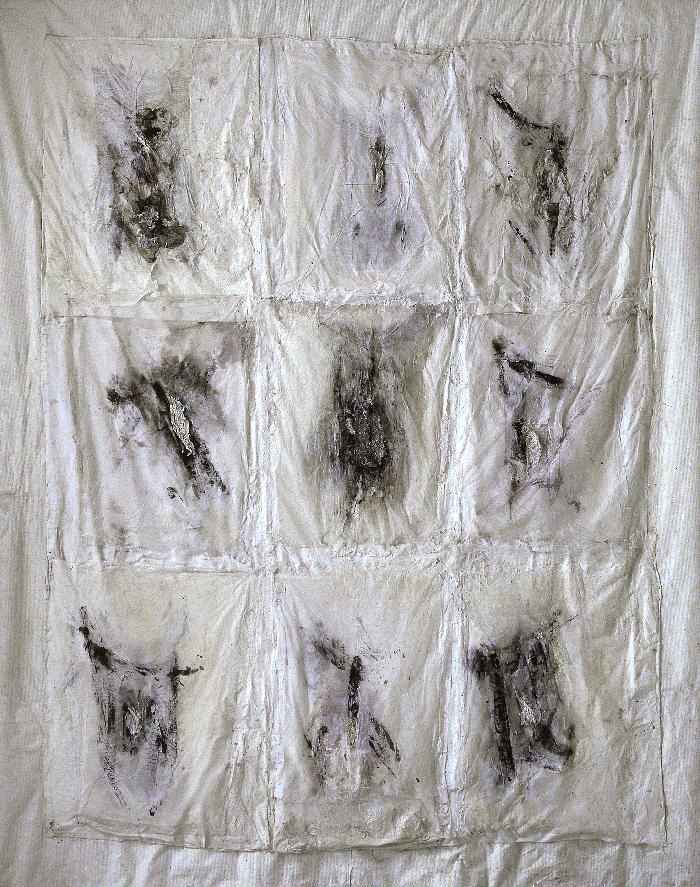
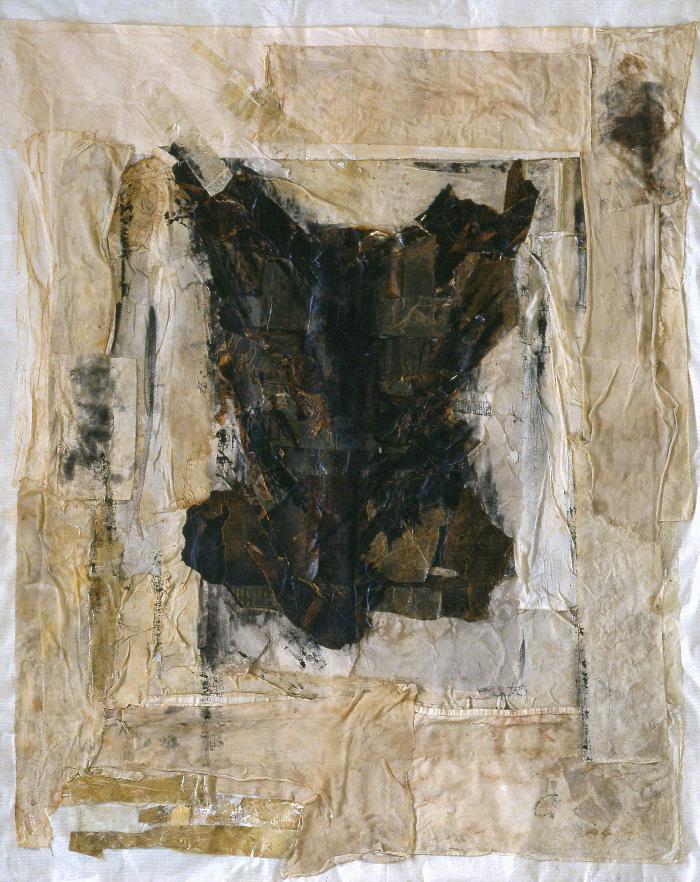
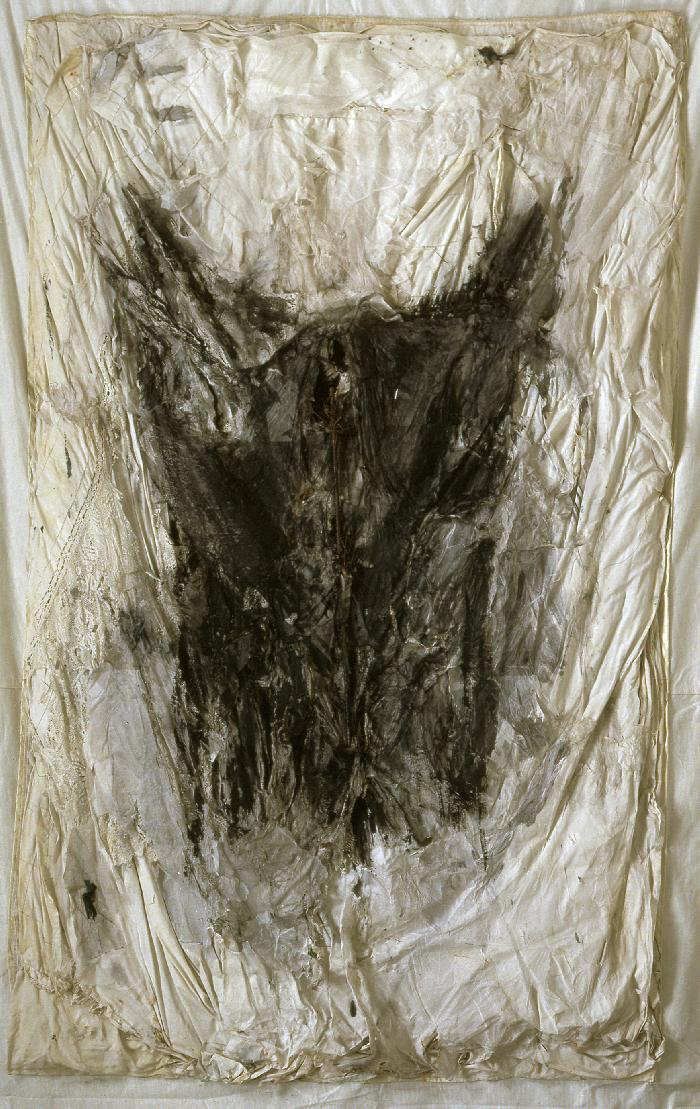
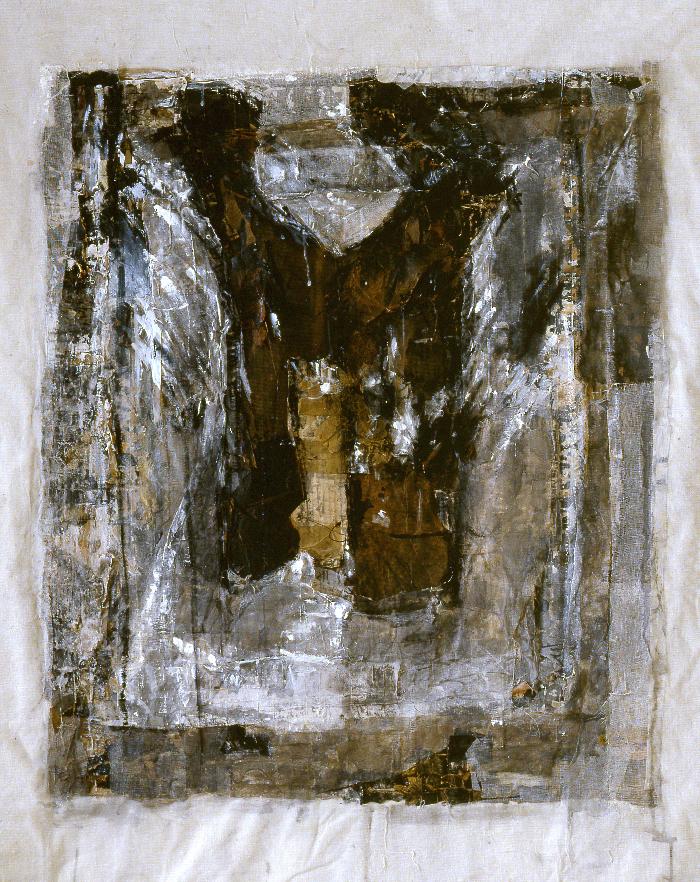
The body, reconstituted by the imprint of the back of a bust, is inscribed with ink on old torn scraps of fabric. This body is  Then dissolving and imprinted as a shadow of what it was, leaving the ephemeral trace of its passage and its annihilation and  then hesitating on the threshold, letting the spectators decide of  it's destiny.

Signs and alphabet

5 series in this thematic

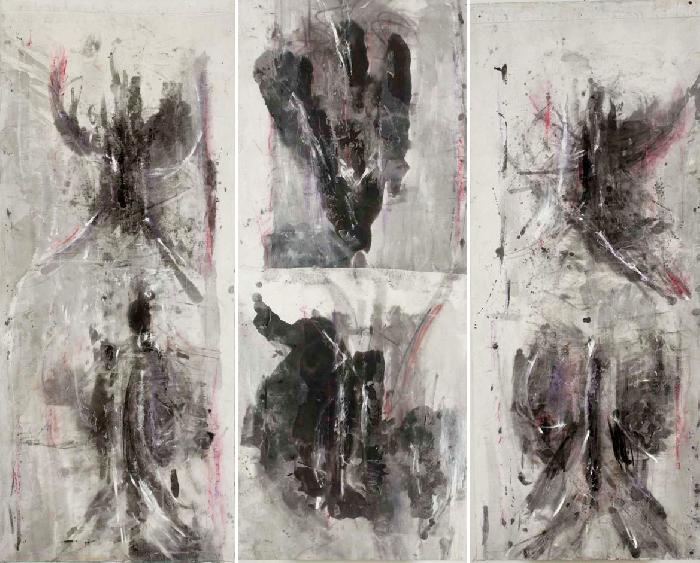
Signs and letters, punctuation and writings, all alphabets, everything that seems to allow a semblance of communication and written transmission questions me.  I use all these codes and blur them, make them form kinds of landscapes and anthropomorphic figures. The transversal issue of writing applies also to the theme of the body and  the landscape.

The Dialectic of Metamorphosis

  • Landscape is understood as an entity in constant mutation. The artist explores its metamorphoses through:
    • The fascination with the visible: She is captivated by the "diurnal colorful diversity" and the visual power emanating from the natural environment.
    • The cycle of transformation: Metamorphosis links the body to the landscape. The artist describes a process where traces left by bodies become "reflection then seed, then flower," inscribing the human within a cycle of natural regeneration. Slide titles such as "Flowers & seeds" or "Reflection & transparency" illustrate this ethereal and changing dimension.

Fragility in the Face of Dissolution
  • The artist's reflection is deeply nourished by the intrinsic fragility of the landscape, which she develops from several angles:
    • Natural dissolution: Nadine Kohn-Fiszel expresses a fear of "natural dissolution" and the erasure of forms. This fragility is explored in series with evocative titles such as "Meteors & Nebulae".
    • Human impact: The modifications caused by humans on their environment constitute a major source of concern that fuels her work.
    • Power and anger: The fragility of the landscape coexists with its raw power. The artist mentions the "fear of its rages," a destructive force found symbolically in her series titled "Tsunami".

A Transversal Concept
  • For Nadine Kohn-Fiszel, landscape is not merely an external subject; it is an issue that runs through all of her research:
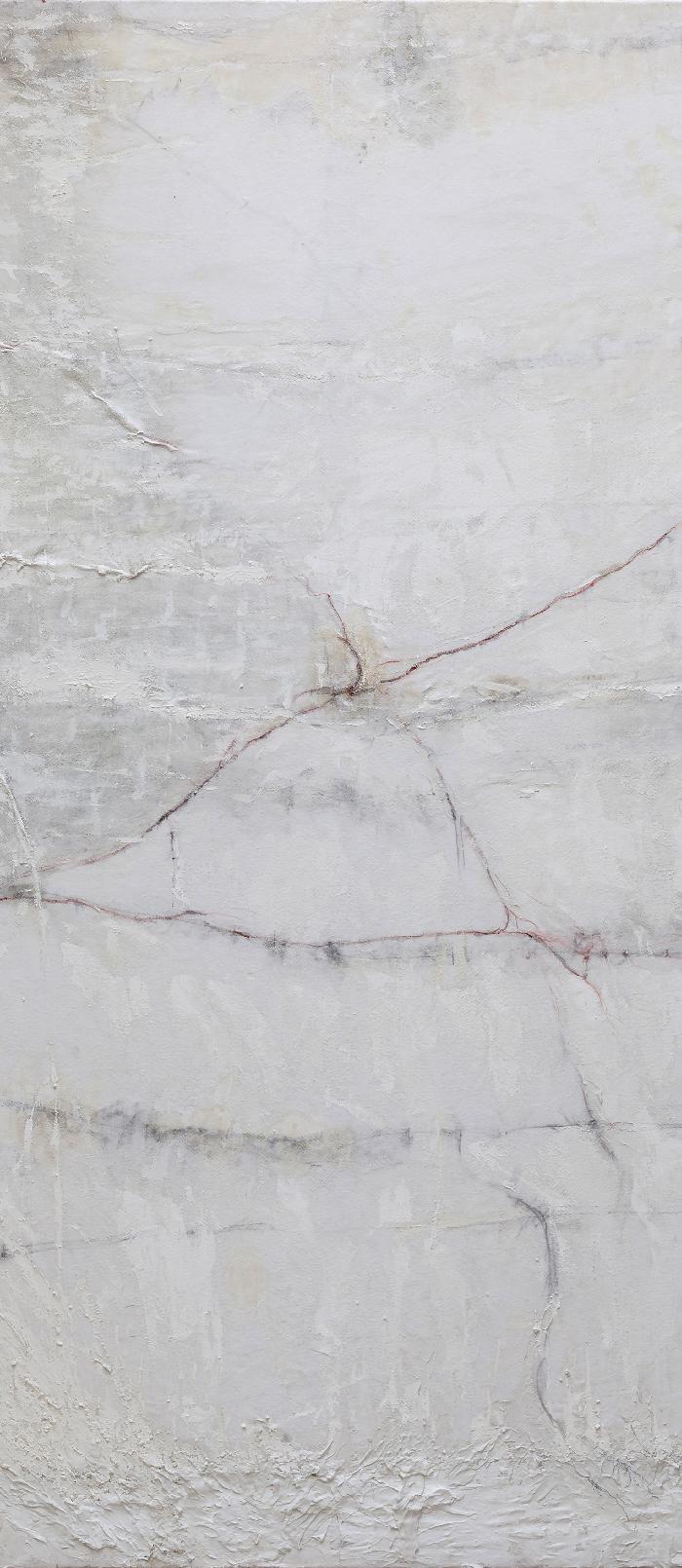
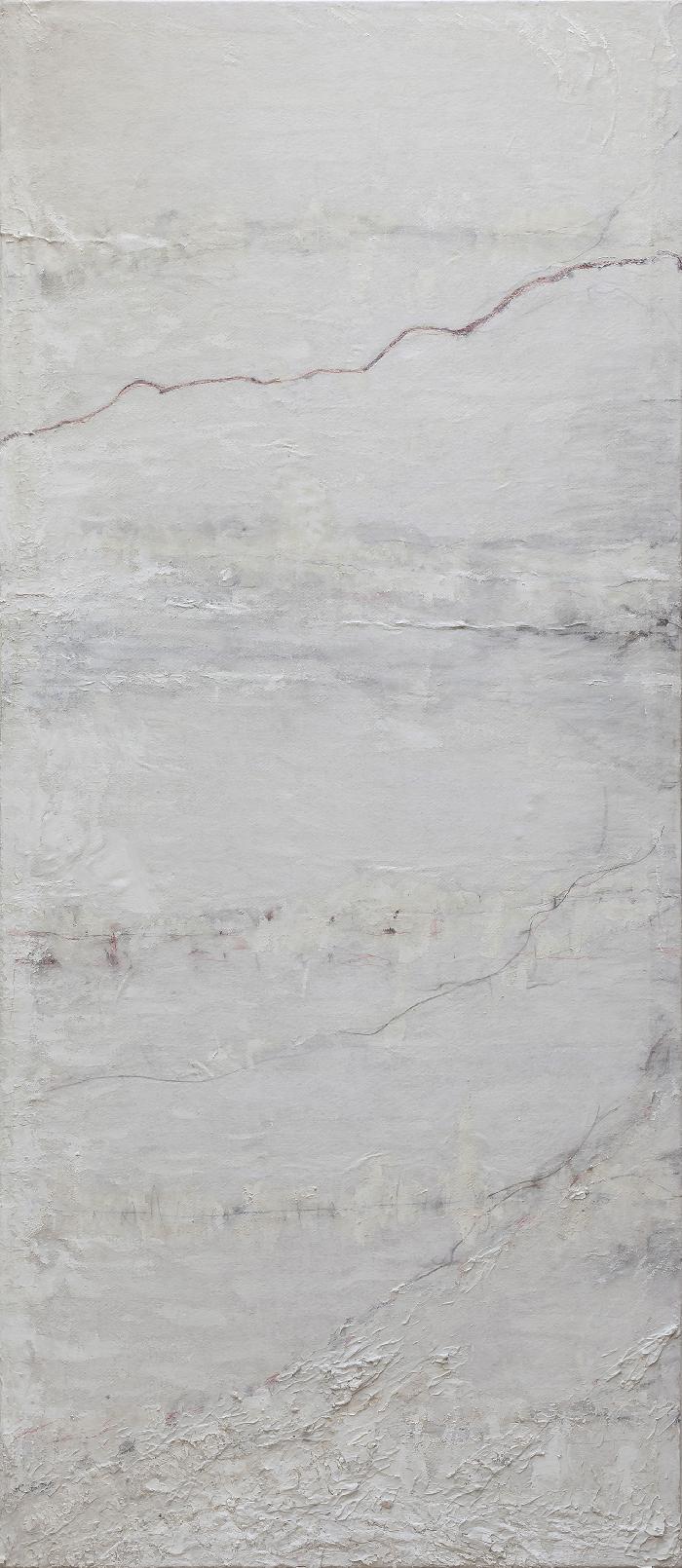
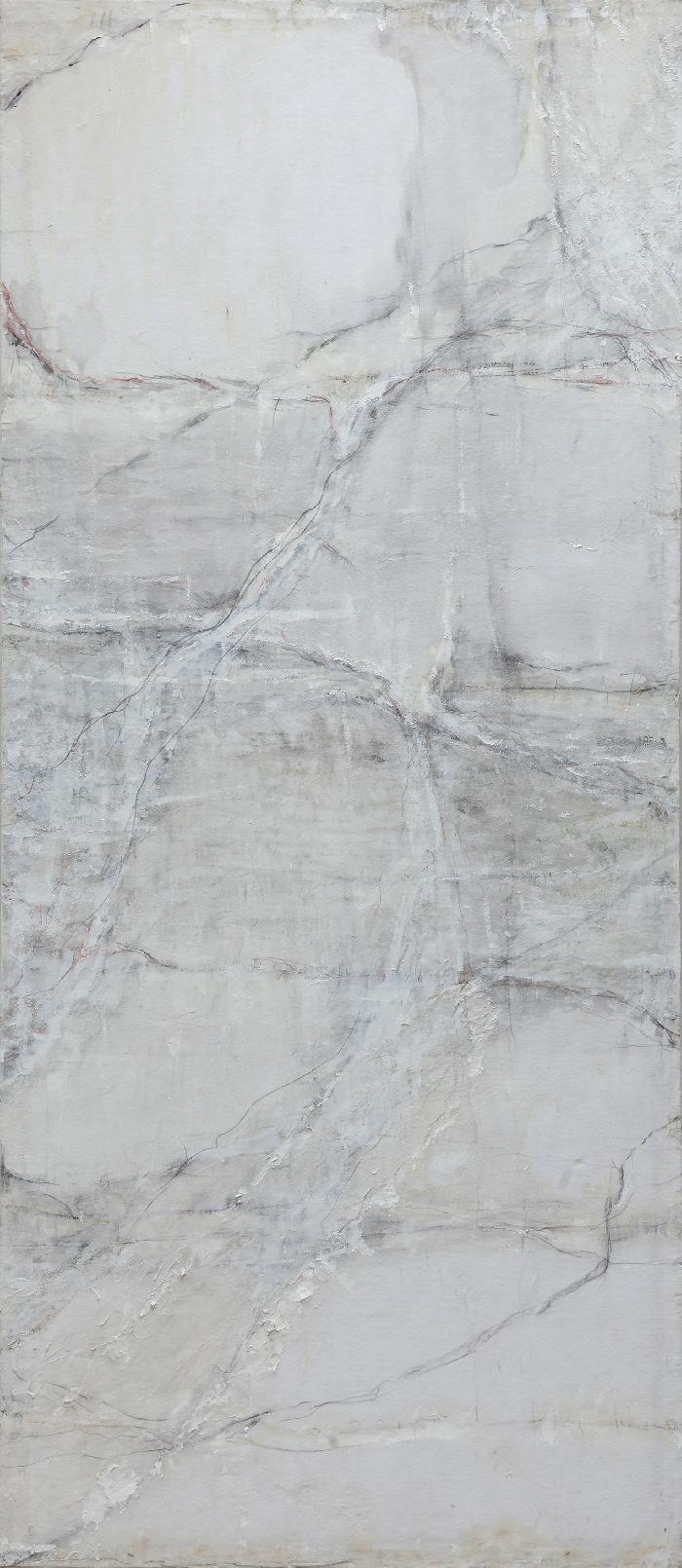
    • Interior landscapes: She explores more abstract dimensions with series such as "Interior Landscapes", "Inside landscape", or "Graphiterre".
    • Interconnection of themes: The theme of landscape intertwines with that of writing and the body. In her series "Signs and Letters," she uses communication codes to construct "kinds of landscapes" and anthropomorphic figures, proving that for her, the question of landscape is inseparable from that of the human and its trace.

Self-withdrawal : the pathways to void.
https://inha-fr.primo.exlibrisgroup.com

Author: Nadine Kohn-Fiszel
Supervisor: Jean Lancri
Type: Doctoral thesis
Discipline: Visual arts and art sciences
Date: Thesis defense in 2003
Institution: University of Paris 1 Panthéon-Sorbonne

The self-portrait, the paths of self-emptying—what does this portmanteau-like title contain? How, from what, by what means, and for what purpose does one withdraw? What is the guiding principle of this journey through the wandering of ink that is applied and leaves a stain? What is the subject of a self at work, sometimes subject, sometimes substratum or subjectile, that eclipses itself from the image that presents, projects, and displays it? Contractions and retractions that panic in anadyomenal movements, in ceaseless ebbs and flows within the restraint of a trace and the deciphering of a landscape. An effort contained within the tension of a final covering, despite the desires for gaping and breaking through that engender the antagonisms of the veiled and the torn, of overload and annihilation. Palimpsests that resist erasure by becoming vestiges. Where to stand between sign, symbol, and allegory? Between matter and immateriality? Ambiguous interplay between withdrawal and portrait, self-portrait and re-withdrawal, headless bodies with missing limbs, yet an offered back that engages. A history of imprint, a history of borrowing, a history of texts and textures that intertwine. The time of history, yes, but what time and what history are we talking about? Past, present, and future shattered and interwoven. Constellated times. Figurehead of the Angel of History, angel of Benjamin's future, a strange, androgynous, celestial, and satanic angel-being, traversing time like Borges's Goofus Bird. And flying toward its future while gazing at its past. Impossible memory of an immemorial latent; labile time. Voids and in-betweens, reserve and breath, West and East mingled. Western cultures, both conflated and detached, emerge in the hollowing out of Kenosis and the withdrawal of Tzimtzum. The Jewish mysticism of restoration intertwines with and responds to conceptual purification. Minimalism and materialism, Tony Smith and Anselm Kiefer, are brought together in this study, which considers Mark Rothko as much as Ad Reinhardt, Barnett Newman as much as Pierre Buraglio, Degottex as much as Donald Judd. Endless aporias arise in the gap and the interval, the hyphen and the distance, which, in the visual arts and in this thesis, attempt to explain themselves.

Loading works...

Biography

Born in 1955.

Diploma of ENSBA (Ecole Nationale Supérieure des Beaux Arts). Major in Sculpture, 1982, summa cum laude. Minors in drawing, painting and engraving.

PhD in Arts and the Science of Art, Paris I, Sorbonne, "Self-retraction, the paths of void", with Summa con laude distinction, 2003.
Part of the thesis pertains to issues inspired by Chinese calligraphy and painting : breath, void, energy and stroke.

Studies in art history and aesthetics for the Masters degree.
Assistant to Danny Karavan from 1982 to 1984.
Art director at the Imprimerie nationale (National Printing) from 1987 to 1992.
Director of a series of artist’s books, Collection Preferences at the National printing office nationale from 1992 to 1995.
Assistant to André Bruyère architect, as a visual artist for 15 years, creating several monumental works for banks and hospitals in the city of Paris between 1980 and 1995.
Works with other architects on private and public orders, between 1980 and 1995.
Teaches artistic theory and applied arts until 2008.
Lecturer on art.
Interviewed in September 2007 for radio J, by Fania Perez on my work, following a solo exhibit (In the cultural program « l’Art et la Vie » (Art and life).

Exhibits regularly since 1978, both solo and group shows.

Last exhibitions;
Hong Kong 2019, Affordable Art fair Miami , 2018, Acqua fair.

Solo shows:

Galerie des Grands Augustins, Paris 1978.
Collages Galerie Peinture fraîche, Paris 1982.
Sculpture, drawings, Galerie un moment en plus, 1981.
Drawings Espace Archy Yulzari, Paris 1982, sculpture.
L’App’art Brussels, Belgium 1989, burnt papers.
Galerie Quang Lan, 1991, transparencies, works on paper, works on fabric.
 Galerie Caractères, Paris 2007, « À dessein », drawings, paintings Galerie Ego, Paris 2009, drawings, paintings.
EMG Art center, Beijing, May - June 2012, Festival Croisements EMG Art center, Guanzhou, July - August 2012. Both exhibits are part to the festival Croisements, organized by the French Embassy France and the ministry of China cultural affair.
br Group shows since 1980 :

Salon de Mai, Salon de Montrouge, Réalités Nouvelles.. (several times in each show).
Galerie Mabel Semmler, Paris, 1995, 2000, 2004.
 Regular exhibits at the Inter Atrium Gallery, Porto, Portugal.
 Art fair Shanghai 2010.
Art fair Canton 2016.
Fincoach Exposition Isisexpo 254, rue du Fb St Honoré, 75008, Danielle Cohen 2018.
 Acqua artfair Miami 2019.
Affordable art fair, Hong Kong.

 Drawing of the series « A dessein » auctioned at the auction house Artcurial, Paris, 2010.
Painting of the series « Schmates Etc. » auctioned at the auction house Artcurial, Paris, 2011.

 Publications : Schmates, A dessein, Memory lane.
 

Exhibitions

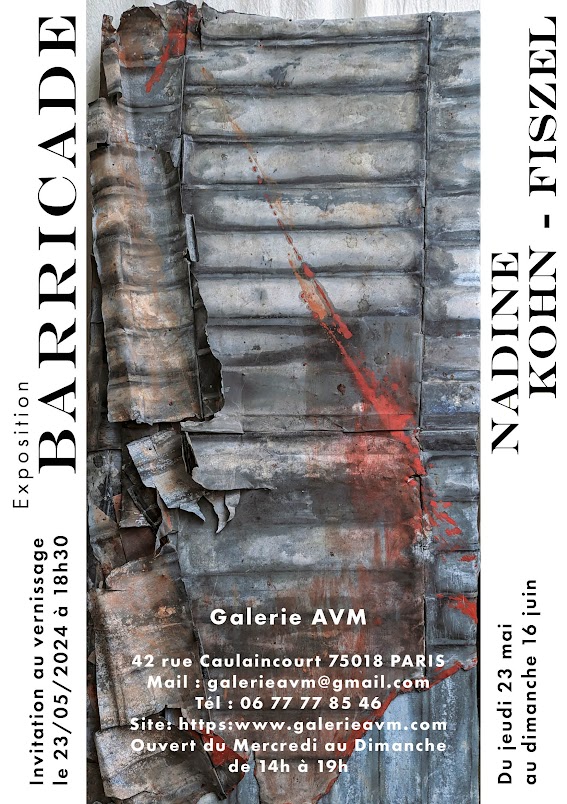
Barricade

23/05/2024 - 23/05/2024
AVM Gallery Paris 18ᵉ

ZINC PARTS

Adornment and imprint

07/10/2022 - 07/11/2022
AVM Gallery Paris 18ᵉ

Exhibition juxtaposing the works of Nadine Kohn-Fiszel and Alain Delpech

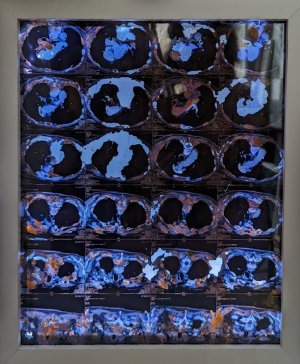
Beyond Lost Bodies

01/01/2022 - 01/01/2022
Esther Woerdehoff Gallery at Tel Aviv

(Opening on June 17, 2022), solo exhibition of works created during lockdown using medical X-rays

Memory Lane

01/01/2012 - 01/01/2012
Beijing + Guangzhou/Canton

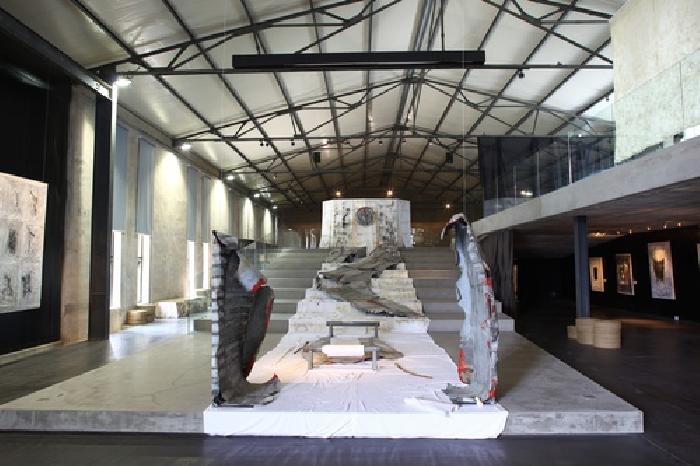
Two major exhibitions in Beijing (May-June 2012) and then in Guangzhou/Canton (July 2012), presenting around thirty paintings from the Schmates series and a monumental 25-meter installation created for the Croisements Festival

Fresh Painting Gallery

01/01/1982 - 01/01/1982
Paris (75007)

Sculptures, bas-reliefs and drawings

Gallery of the Grands Augustins

01/01/1978 - 01/01/1978
Paris (75006)

Collage exhibition

Fairs

Hong Kong Affordable Art Fair

01/01/2019 - 01/01/2019
Hong Kong Convention and Exhibition Centre, Expo Drive, Wan Chai, Hong Kong

Aqua Art Miami

01/01/2018 - 01/01/2018
South Florida

Fincoach Exposition Isisexpo

01/01/2017 - 01/01/2017
Paris (254 rue du Faubourg St Honoré)

Art Fair Canton

01/01/2016 - 01/01/2016
Canton (China)

Press & Texts

China Daily:  Mixing it up,  2012-06-29

French artist Nadine Kohn Fiszel works with xuanzhi (traditional rice paper for Chinese painting and calligraphy), ink and barbed wire to express how she feels about the passing of time. Her intriguing exhibition The Falling Blackness is on show in Guangdong province's capital Guangzhou.

To manifest the theme of time lapse, Fiszel chose used and abandoned materials, such as rusty wires and rags. She also purposefully created subtle wrinkles on the xuan paper.

The versatile artist displays her paintings, installations and plastic artworks at her Guangzhou exhibition. The organizer also creates a festive feel with music and French wine.

9 am-7 pm, until July 23. EMG Art Center, C5, Redtory, 128 Yuancun Siheng Lu (Exit B,Yuancun metro station), Tianhe district, Guangzhou. 020-3866-3122.

Article of the China daily concerning the exhibition Memory lane

More than 50 medias reported the exhibition, i ncluding news papers,magazines and websites:      《中国日报China Daily》: https://www.chinadaily.com.cn/life/2012     

Life of Guanzhou's article

 The video, produced, following the Beijing exhibition, was then an integral part of the interactive installation " Ma river ". the installation has been significantly modified to suit the exhibition in Guanzhou, instead of the interaction with the first video.

Video of Ma River

Pékin, may, 2012 ,12 june 2012 : https://nadinekohnfiszel.art/Installation-Ma-River-Pekin-Canton.mp4

Conférence sur l'installation 'Ma river' 12 juin 2012

How to shape signs
How can we suggest through signs a world of sounds, of visual meanings, of new poetical associations, different and yet complementary?
Punctuation marks - especially the question mark - give words sonorities that express interrogation in French and Chinese.
In this work I have shaped signs: something like new emoticons or smileys, these series of punctuation so often used in e-mail communication by young people, especially in China.
br have traced punctuation marks, commas in the shape of pins. I have drawn lines: hyphens, question marks; I have opened and closed brackets; all of them signs of doubt and asides.
Parenthesis (brackets), inserted in the text, without modifying its meaning conveys further information. Like an oval door it opens on a space of doubt and questioning. It enables discontinuity and digression; it accompanies my way of thinking and helps limit explanations.
This way of thinking and of creating, rhizome -like, proceeds by rebounds and resonance.
br Punctuation, which was codified in France as soon as the eighth century facilitates the reading of texts. The written text – up to then interpretable and difficult to segment - was clarified and became a language in itself, modulated by blanks, stops, pauses, and voids. These voids – neither interruption nor nothingness – are in Chinese Art an active principle, engendering breath, and fundamental in the process of creation. Punctuated reading with its changes of intonation, of inspiration engenders rhythm. Melodic inflections, codified cantilation and declamation are made possible. –br
In its beginning the question mark was more like a dot topped with a line zigzagging towards the right, no doubt echoing the ascending tone of the human voice. Drawn upside down it rapidly acquired its current shape. (Note that in Spanish there still is an inverted question mark at the beginning of the sentence and a question mark at the end). In (written) French the inversion of pronoun and verb is required. As soon as the eye perceives the question mark at the end of a sentence, the vocal tone is raised as on this flight of stairs.
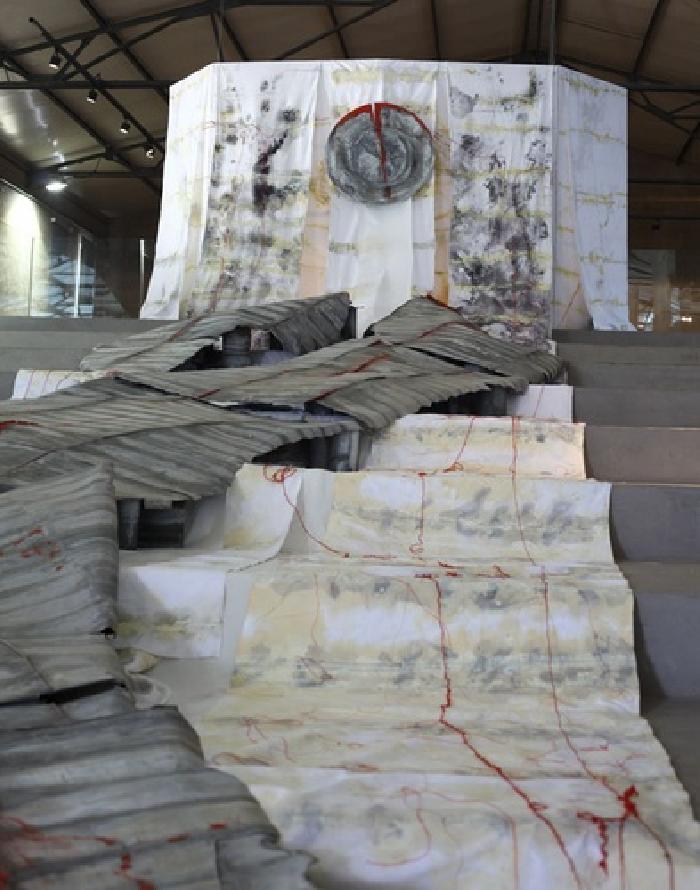
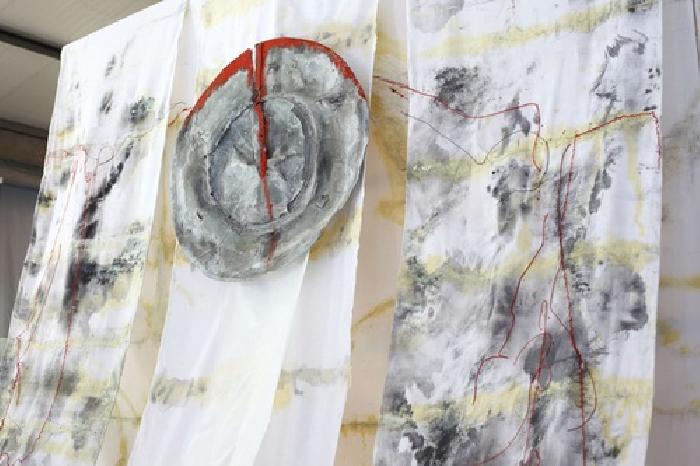
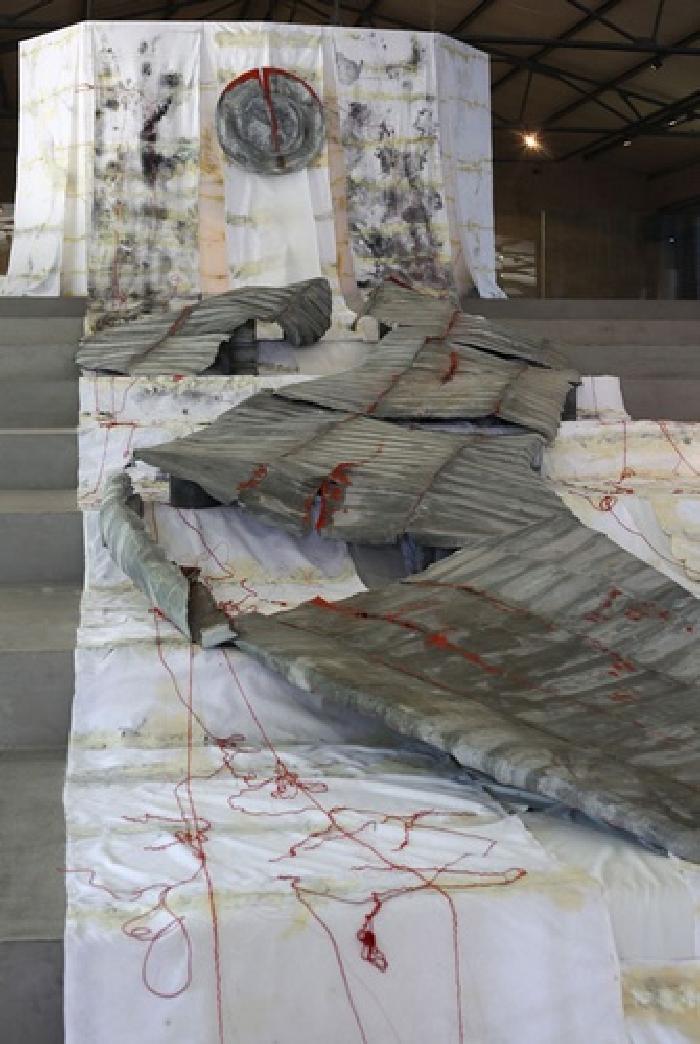
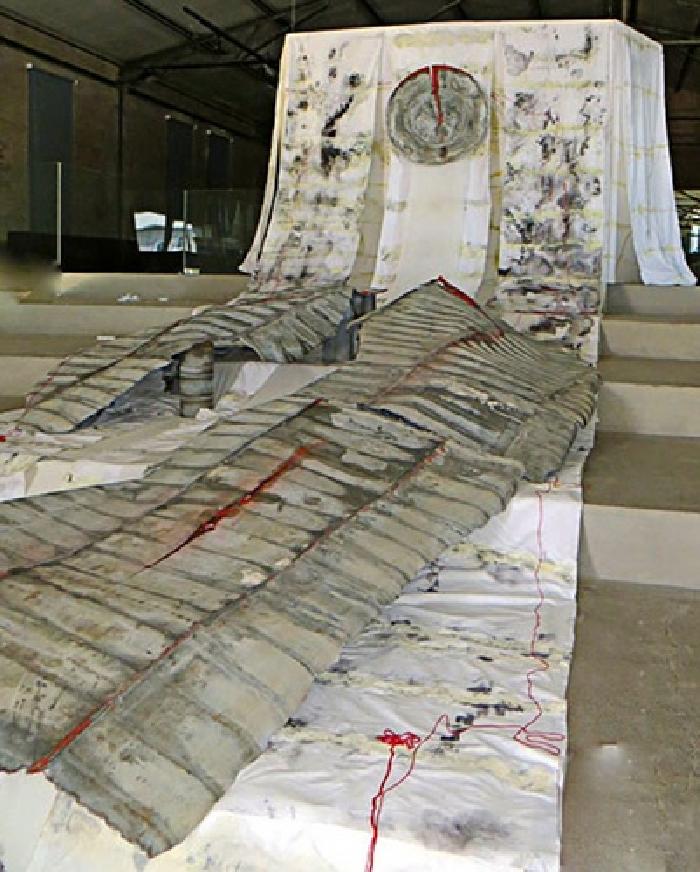
br Transformation and simplification of the Chinese written language occurred later, at the beginning of the twenties, reflecting deep societal change. Punctuation marks replaced “empty words” The particle MA added to the end of a declarative sentence turned it into a question without changing word order. Ma attracted me or should I said fascinated me. Hence I have replaced the interrogative form of my questioning by a sign, compulsory in French; here huge and set between brackets. It punctuates and makes my doubts and incertitude visible while forming another figure of speech, an oxymoron, and an ephemeral installation. If installing signifies staying in the same place, on the contrary, it is due to the constant interaction between different cultures that interrogation is born and lives. Installation involves interactive participation. It is a moment of shared writing, of calligraphy on an ephemeral roll, recoverable like a palimpsest if I do not ink the water with which you will be able to write your quotes, questions and comments. This fugitive moment becomes eternal when recorded and preserved by video. Material substrata are all important to me: they trigger imagination and thought. I have stuck for this installation to the more basic elements used in plastic arts. The number of materials was reduced to give ink, water and pigment better visibility. I have used various materials: zinc acting as the memory of passing time and bad weather; felt and unwoven fabric as memory of habitat, transhumance and clothing; thread and wire. - The metal – sheets of zinc -used for my punctuation marks is a malleable covering material, more or less like a coat. It has kept the traces of its contact with the framework – wooden laths - on which it was laid. The inner hidden side is imprinted, lacquered with dry sap, while the outer side, exposed to the elements - or more poetically to the changing skies – is covered with a whitish layer that protects and characterises it. Simple to handle, zinc has been widely used since Baron Haussmann renovated Paris back in the 19th century. It gives Parisian roofs their architectural identity. For this installation, I have used the zinc of the old roof of my studio. Stocked for ten years, I sometimes made etching plates and engravings out of it but had never dreamed of its current destination. It is impossible to weld old zinc; for this reason I have linked, imbricated the edges of thin plates, then burned and soldered their borders with a blowtorch. The main pieces (7) of my question mark are not connected together and the fractures between them are significant: they obey the geography and topography of the place (here the steps) and allow void to circulate. The cut out zinc sheets become scales, strange carapaces partially covered with illegible red writing, an imaginary/chimerical “shell and bone script”. The supports have been made out of thin strips cut in old zinc sheets., - Felt is a very ancient material made by pressing fibres and various animal hair, especially wool. It absorbs moisture and is extremely resilient. It is a non-woven textile. Used in the beginning as construction material by nomadic tribes it was later used everywhere, especially in cold windy countries. It absorbs ink and water. Calligraphers use it as blotting paper beneath their drawing pages. It receives the faded print of their written texts and thoughts. It is the symbol of both loss and retention. I must admit: it violently reacts to pigments. It is easy to model and mould but difficult to paint, as water and oil tend to spread on its surface, disrespecting hand-drawn lines. For the last three years it has been the support for my graphite powder, zinc pigment, crayon, pastel and sometimes-acrylic paths and landscapes (which I call my graphitscapes), It covers the screen and the steps. A screen usually preserves privacy, here paradoxically I invite you to walk along and round its panels and lift its curtains. - Paper, which is also unwoven, receives your writings and their projected images. - Pins and thread perform their original function. Pins are a link between body and clothing, sewing and geography. They guide the eye and, blending with lines and drawings, delimit my landscapes. Unlike acupuncture needles, they suggest abandonment of body and meridians but instead invitation to inner journeys (within oneself). - Wire, I have always used as framework and grids. - Staple vocabulary and materials: abandoned, disused, taken back, rusted wire, discarded fabric, darned, disdained… all becoming matter for thinking the future. - The folds of the fabrics, which I work on, bear the marks of passing time; useless miniature dikes and dams catching the eye and trying in vain to modify elements, conditions, and memory. The door and screen lead to thresholds and limits. - About my lettering: unformed letters, indefinite characters, and forgotten tongues, mixed writing, all combined in an unconscious Esperanto. - The colours here are the ones I use most frequently; I associate them with China: blacks, reds, whites, greys, light, deep, dense, thick, intense. Each of them a world, a wave in itself. 。 Conclusion. Some of you will see a human back in the paintings I am showing around this installation. An acephalic (headless), sexless back standing on a threshold, hesitating between present, future and past, that may evoke Paul Klee’s “Angelus Novus, described by Walter Benjamin as a body pushing « into the future, to which his back is turned, while the rubble-heap before him grows sky-high » And yet the lines I have traced on the felt that covers screen and floor are those of a path. An intimate, individual path, but whose many ramifications we will travel. There, connected to the elements, to other civilizations with their own histories and richness of thought, we will be able little by little to build a common future. For “Croisements” I have tried to weave a web of image, meaning, sound and resonance. The Chinese sound MA fleetingly/briefly takes me to other shores: to the Japanese interval between space and time, to the Hebraic Mah –both pronounced MA. Punctuation -and its varied shapes- makes me meditate on the fertile connections to be found in the Chinese architectural representations of the circle, square and rectangle. The zinc cover with its burnt edges is the beginning of a reflection on skin, sewing and clothing. The rolls of paper carry me to the waves of the ocean; the writing leads me to the river. –
br    I hope everyone will be able to find in this installation their own intertwining. But which ones…….. ?

Exhibition review in English by Victor Wong, exhibitions curator in China

The first time I met Ms. Nadine Kohn-Fiszel was during Art Canton 2010, among those art works shown in the Art Fair, not like the other artists who tried to express their emotions and concepts, attempting to display their inner world as much as they could, Nadine wanted to let go whatever left in the past, or existed at the present, or will come in the future. There was a force which contained within her works and dissolved everything in front. “Tombant noir au grillage” is one of my favorite paintings, the composition and perspective of the painting have an invisible power to attract the attentions and grasp the viewer into the “black hole” of memory. The door to the unknown world arouses the curiosity, at the meantime brings the fear to the surface of consciousness. But the iron mesh forges a blockage, symbolizing a memory unbearable to recall, a spiritual struggle, and a painful breath, but everything will be washed away as time goes by. Nadine uses a way of “lightness” to handle the “heaviness” of heart and memory, she guides you to explore far into the depth of memory, meanwhile obstructs the “entry” and “information embedding”. The tableau she presents in a western way has surprisingly the similarity with the one of Chinese ink and wash drawing. Every time when I see the painting, I can’t help holding my breath, the desire of peeking the secrets of soul is increased, but restrained by another kind of power at the same time. The tension puts the viewer in dilemma, and drives him or her to explore more about human nature. It’s as if you were going through a meditation every time when you gaze at the painting. The art work reflects a kind of loneliness and coldness as well as a sense of historical heaviness, moreover, it always give you a feeling of nihility. As Genesis of Bible says: in the beginning, God created the heavens and the earth with “word”, but Nadine dissolves what He created with her “painting”. The installation “Ma River” is surrounded by her paintings in EMG Gallery Beijing. The huge reversed question mark made of the metal zinc is placed on the ascending steps in the center of the art space. On the top step there is a big dot which is part of the question mark, symbolizing the origin of everything in the world. In Chinese, the word “ma” is put at the end of the sentence, thus becomes an interrogative sentence. And the sound “ma” is the first incantation (dharani). “The earth was without form, and void; and darkness was on the face of the deep. And the spirit of God was hovering over the face of the waters. Then God said, “let there be light”; and there was light”. God created the world with “word”, and the “word” is the sound made out of God. The installation draws the viewer back to the beginning (the origin), and confronts him or her with a big question mark “why”. On the other hand, the reversed question mark suggests that the earth is only the shadow of heaven, and what we see with our eyes are only the reflection on the surface of water. The “ human backs” in the paintings around the installation stand in the threshold, hesitating between past, present and future, but all the forces come from the origin, the source, and the question mark, everything is connected, and all those paintings become the extension of the installation. What is to be is decided by what it was originally. The installation generates a great power at the centre like a spring of water, and the spring becomes a river, and the river flows into the sea… “I am the way, the truth, and the life, no one comes to the Father except through me”, here “me” stands for “ma” – the question mark ”?”…
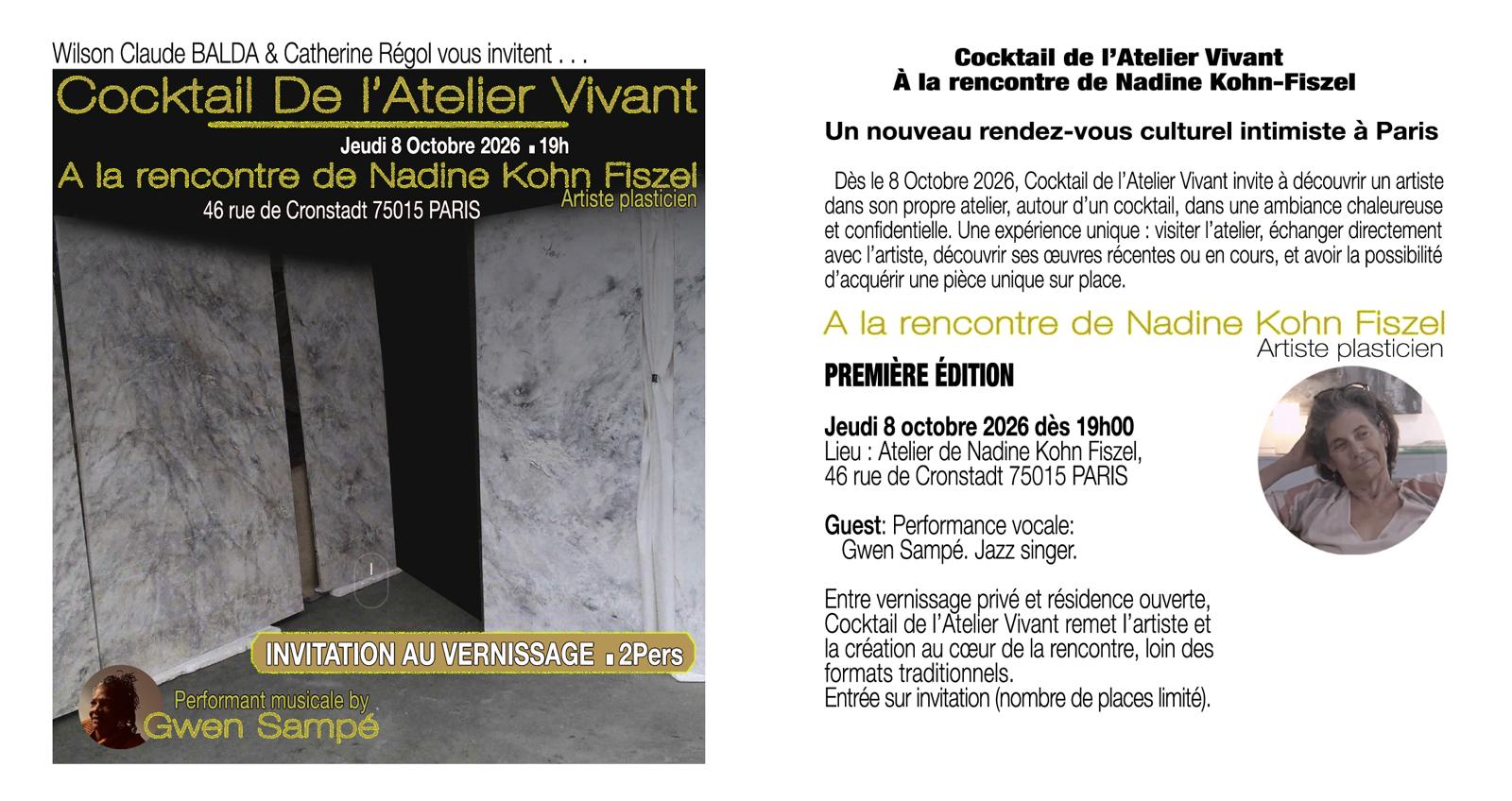
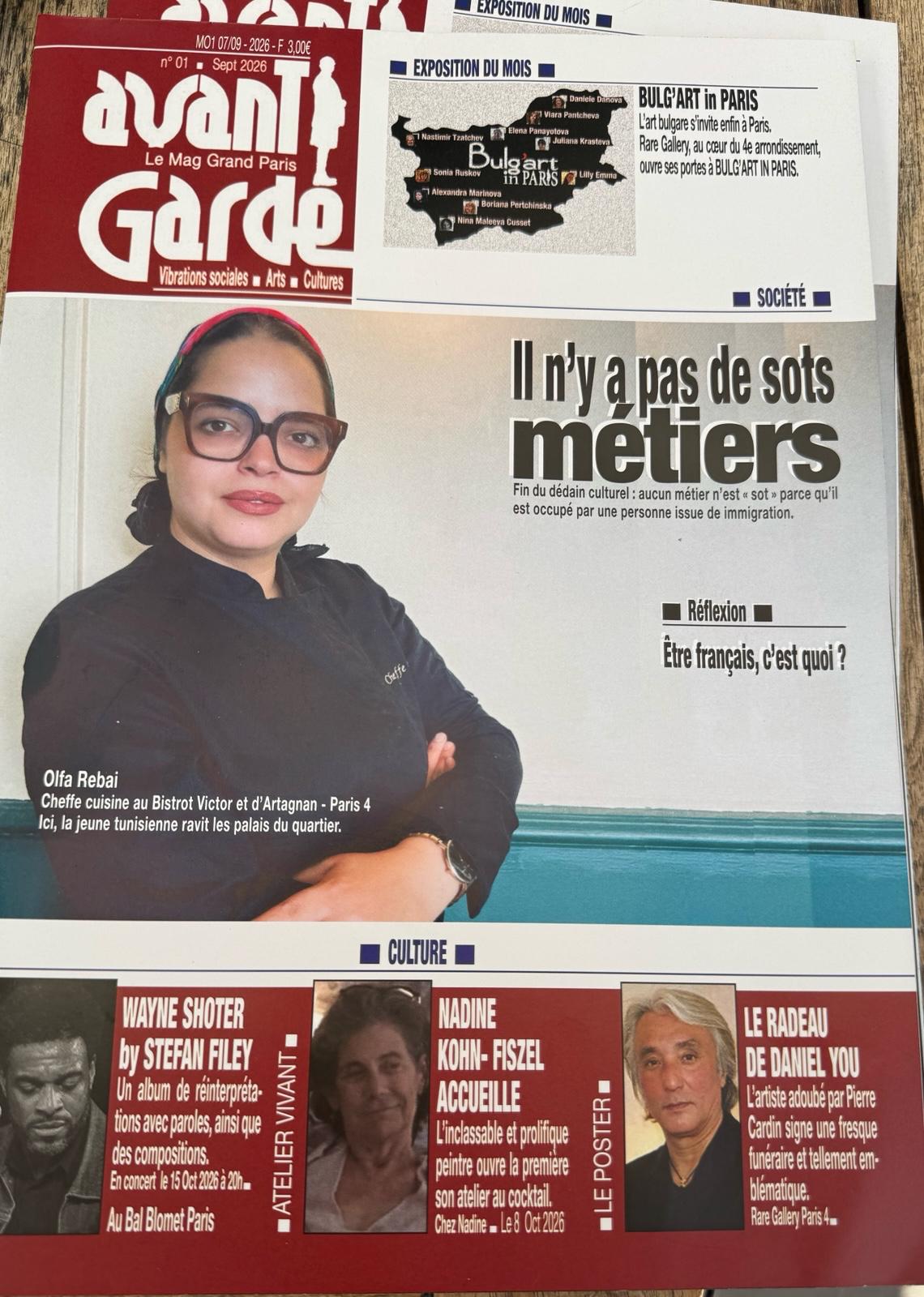
Related Works (Memory lane)

See all works of this series →
Two major exhibitions took place in 2012, in Beijing and then in Canton.
  The exhibitions both included around thirty paintings from the Schmates series and a monumental installation of 25m long and on stairs at Beijing, specially produced for the Festival Croisements.
Punctuation marks and more precisely the question mark and the parenthesis were the guiding reasons. These signs, common to both languages and the sound Ma, which indicates the interrogative form in Chinese, are the start of a reflection on our questions.
The photos, with the exception of the last two, are taken at EMG art center Beijing. The last two at EMG art center Canton.
Untitled work
Click to enlarge
Untitled work
Click to enlarge
Untitled work
Click to enlarge
Untitled work
Click to enlarge
Untitled work
Click to enlarge
Untitled work
Click to enlarge

Beyond Lost Bodies

A solo exhibition by French artist Nadine Koun Faisel. The artist lives between
Tel Aviv and Paris, and creates in both cities out of the same inner passion for exploration,
in both languages. She examines the world—among other things, through her engagement with the body, its exteriority
and interiority.
In the past, Nadine created body prints: she smeared paint and ink on parts of her body
and imprinted them on sheets of paper and canvas in a kind of one-time, single-value documentation.
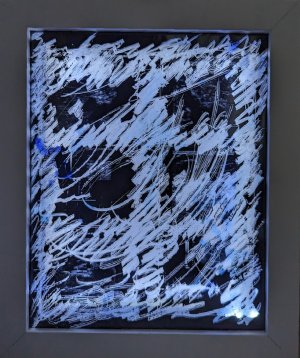
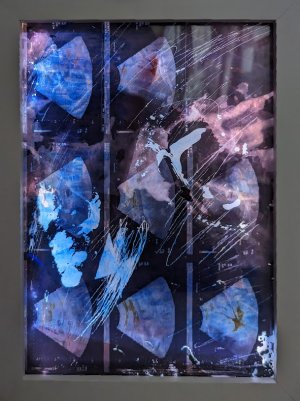
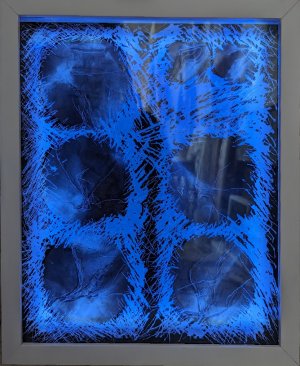
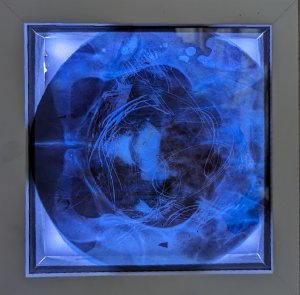
A home encounter with the family health folder during the coronavirus lockdowns led her
to pull out the family's X-rays: square, black film sheets
containing negative images of body parts. She began to draw on them using
the tip of a knife, a screwdriver, a nail, or a knitting needle. The drawing corresponds freely with the precise medical image
and creates a sense of liberation from limitations.
Shuki Cook Studio, Noga Complex - 11 Ruhama Street, Tel Aviv-Jaffa
Closing: July 28
The Local Ramat Gan-Givatayim | Issue 1419 | 8/23/2022

Related Works (Beyond Lost Bodies)

See all works of this series →
During COVID, I had no equipment available at home to work with. I then used my own X-rays, household products, and everyday instruments. I knew that the original material, the X-rays, would disappear, replaced by CDs. Then I managed to obtain other X-rays and my dialogue with the trace and the disappearance of the bodies was able to be restored.
Untitled work
Click to enlarge
Untitled work
Click to enlarge
Untitled work
Click to enlarge
Untitled work
Click to enlarge
Untitled work
Click to enlarge
Untitled work
Click to enlarge

Two Tsunami

At a collector

Related Works (Tsunami)

See all works of this series →
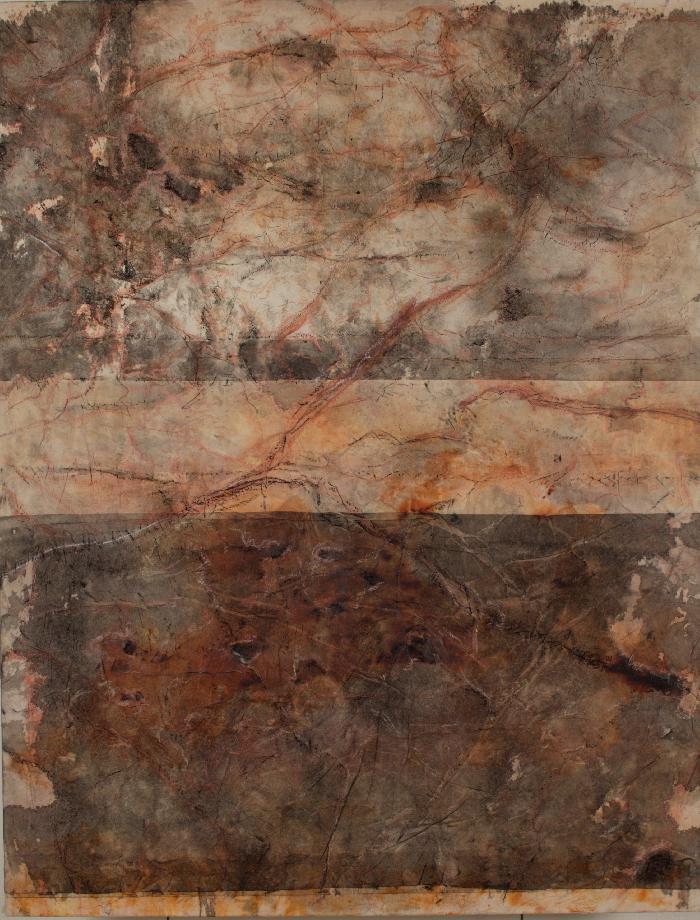
2006-2007 The landscapes disappear and often some bands define the present, the past and the future. Works on canvas, and, on some of them, addition of collages, uniform size; 116 x 89 or 150 x 97
Terre 1
Terre 1
2007, inks, pigment, acrylic, Japanese paper, laid down on canvas, 116x 89 cm.
Click to enlarge
Terre 2
Terre 2
2007, inks, pigment, acrylic, Japanese paper, laid down on canvas, 116x 89 cm.
Click to enlarge
Terre 3
Terre 3
2007, inks, pigment, acrylic, Japanese paper, laid down on canvas, 116x 89 cm.
Click to enlarge
Terre 4
Terre 4
2007, inks, pigment, acrylic, Japanese paper,  laid down on canvas, 116x 89 cm...
Click to enlarge
Terre 5
Terre 5
2007, inks, pigment, acrylic, Japanese paper, laid down on canvas, 116x 89 cm.
Click to enlarge
Terre 6
Terre 6
2007, inks, pigment, acrylic, Japanese paper, laid down on canvas, 116x 89 cm.
Click to enlarge

Some drawings

Private exhibition with one of my collectors. Paris Faubourg Saint-Honoré.

Some drawings

Private exhibition with one of my collectors. Paris Faubourg Saint-Honoré.

Critical text, by Nicole Gdalia

Was the purpose of Nadine Kohn-Fiszel that of skinning proper to the support of being? The traces - barely traced - in dry pencil, in pure or diluted ink suggest, more than they mark, the movement, the gesture that arose after the asceticism of the "wou wei". From the flatness of the line or the curve launched without authorization to repent, it arrives with its collage of rice paper, bis on white, plated or crumpled, in dialogue with the strong or light writing, round or vertical, to reconnect, with the third dimension which accompanied his beginnings as a sculptor. Starting from discipline, from self-restraint, the work of Nadine Kohn-Fiszel calls for seeing, to a receptive meditation posture. Almost nothing fills the interior of the viewer and puts it in the echo of a path initiated by the artist. It opens the way from self to self, from self to others.

Related Works (À Dessein (Designedly) )

See all works of this series →
1996-1998, Drawings made on the same thick Lanaquarelle paper, with the same size 55 x 76.
Indian ink, pencil and charcoal, some collages. 
  In this numbered suite, the drawings respond to each other and the square shapes open towards ovoid shapes, then close and gradually disappear.
Untitled work
Click to enlarge
Untitled work
Click to enlarge
Untitled work
Click to enlarge
Untitled work
Click to enlarge
Untitled work
Click to enlarge
Untitled work
Click to enlarge

Inner Landscape

Miami

Related Works (Inner Landscape)

See all works of this series →
To break away from the landscape after having internalized it, to better make it spring, on canvas or on laid down paper, profusely and thanks to the colored, dry and oily pastels. Take advantage of the intense light of Tel Aviv to amplify the nuances of the sea, the sky and plant world.
Bleu
Bleu
2017, Acrylique, pigment, Indian ink, charcoal, pastel,  on canvas, 75 X120 cm.
Click to enlarge
Gris bleu
Gris bleu
2017, acrylic, pastel, charcoal, on Japanese paper, mounted on canvas, 60 x 120 ...
Click to enlarge
Feutre bleu-vert
Feutre bleu-vert
2016, pigment, ink, acrylic, on felt,73 x177 cm.
Click to enlarge
Paysage gris 2
Paysage gris 2
2011, pastel, acrylic, inks, pencil, on felt, 89 X130 cm.
Click to enlarge
Rouge
Rouge
2018, Acrylique, pigment, on canvas, 106 x 127cm.
Click to enlarge
Feutre roux
Feutre roux
2016, pigment, ink, acrylic, Japanese paper, on felt, 64 x154cm.
Click to enlarge

Small pieces

2007, Series of paintings on canvas, 30 x 40 cm.  
View of the Fessard exhibition, rue du Faubourg St Honoré, Paris.

Related Works (Flowers and Seedling)

See all works of this series →
This series begins after the Tsunami series in 2008. A burst of the previous forms that takes them  into the vegetal world.
Works on canvas or non-woven, sometimes with collages. Indian ink, acrylic and pastel.
Semis vert et blanc
Semis vert et blanc
Green and white seeding, 2019, acrylic and tarlatan on canvas, 90x110cm.
Click to enlarge
Désordre
Désordre
2009, inks, acrylic, on canvas, 116x73cm.
Click to enlarge
Végétation  désordonnée 2
2009, inks, acrylic, on canvas, 130x97cm.
Click to enlarge
Ditpyque Semis rose
Ditpyque Semis rose
Seeding rose diptyque, 2009-20016, ink and pastel, Japanese paper, paper, laid d...
Click to enlarge
Branches
Branches
 2015, inks, acrylic, pastel, papers, 150x50cm.
Click to enlarge
Hommage 1
Hommage 1
2008, inks, acrylic, Japanese paper, laid down on canvas, 130x97cm.
Click to enlarge

Critical text, by Olivier B

Hence these pains ... Can we paint after the Holocaust? Paint the very trace of absence. Paint the absence of traces. This is precisely the dilemma that NKF seems to be struggling with. And it is this debate that is at the heart of all his work. Life at home seems sweet to us, but sweet behind the barbed wire. NKF paints on the razor's edge with the blood of our wounds. She weaves her canvas. His star. But she is not talking about Jewishness, just our survival, all survival. It is not surprising that after Rembrandt and Soutine, NKF in turn attacked the skinned beef. But, going back to the Rembrandt painting that we can admire at the Louvre, have you noticed, behind the ox, this woman, present and yet erased? All of NKF's painting oscillates between these two contradictions. Death screaming its truth and life, in the comforting background as much as it can be. But who really can console the murdered beef? NKF? Who knows...

Mending  by Catherine Ifergan

The light touches the overlays, plays with the folds of these sheets without primer.
The rags come back to life. The bodies blend, between figurative and abstract.
The rags find their place.
The lace is exposed.
The mesh supports, the tar paper protects.
Every discovery moves.
The overlays create an order, organize a framework for each work.
Emotion does not overflow.

Each work keeps its gravity.
By dint of ravages,
 It becomes unique,
while echoing the whole series.
We move away,
we no longer see the materials,
we no longer recognize bodies,
we discern shades,
the diversity of works,
the unity of the compositions.
br The eye enters through all these doors.
br We stay on the threshold…
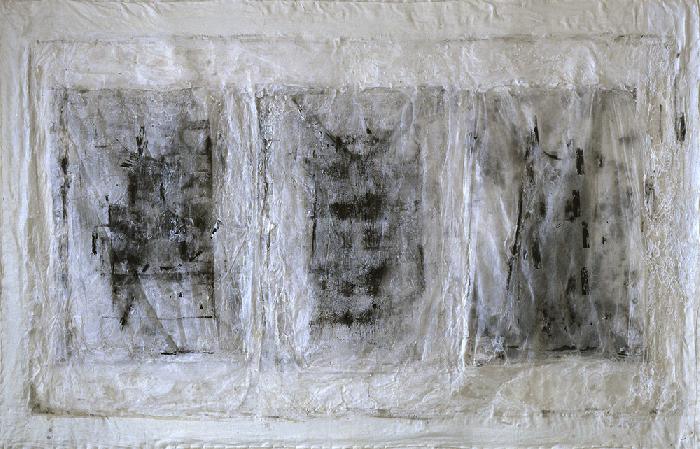
Washerwomen, Catherine Ifergan

Sheets, sheets, stretched over tarpaulins or hanging sheets. It is necessary to raise the head, estimate the dimensions, examine the suspensions, pass between the works to recognize the materials, sheets, pillowcases, rather than the technics : collages, overlays of lace, mesh, paper, on linen or cotton sheets, openwork, overcast, torn but still used.  Formely Feminine universes, diversion from an annual ceremony of dirty and clean, spreading out before washing and not after, exposure of an intimate, of a family, a known or unveiling of tasks, imprints, or living being?

Related Works (Traces)

See all works of this series →
Series that follows on from Schmates and Thresolds.
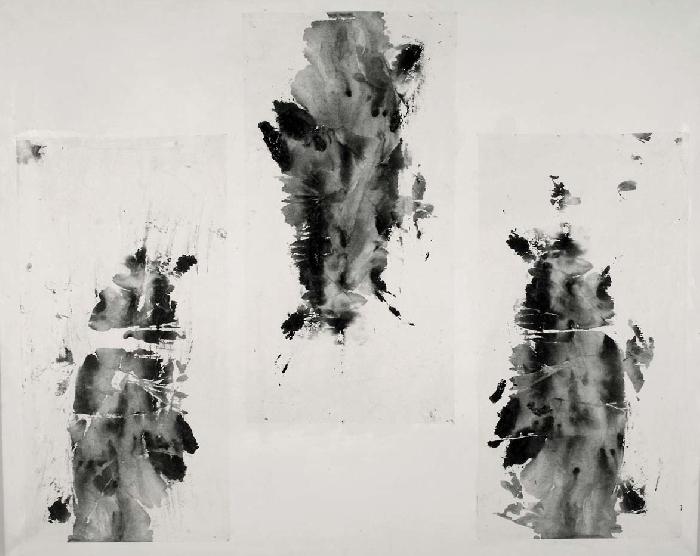
The forms fade even more, leaving on the canvas only a slight imprint of the bodies
Work on canvas with Indian ink, engraving ink and pigments.
Disparition
Disparition
2006, Inks, acrylic, Japanese paper, laid  down on canvas, 75x140cm.
Click to enlarge
Ombre
Ombre
2006, inks, acrylic, Japanese paper,  laid  down   on canvas, 75x140cm.
Click to enlarge
Trace
Trace
2006, inks, acrylic, Japanese paper, laid  down on canvas,71x 140cm.
Click to enlarge
Trois tombants clairs
2000, printing ink, wax, Japanese papers, on sheets,  laid  down  on canva...
Click to enlarge
Cinq tombants effacés
1998, printing ink, Japanese paper on sheets,  laid  down on canvas, 197x14...
Click to enlarge
Trois empreintes noires
2005, Indian and printing ink,  on canvas, 130x 162cm.
Click to enlarge

The Fallers, Nadia Blumenfeld 

The Fallers Nadia Blumenfeld Hanged. bodies no longer respond to the breath of the wind. Stretched, the busts are not appeased  We are at first glance caught and destabilized by the violence that emerges from this body, from this work.   The work is one body and the body gave birth to this work. Materials, because these are relief works in heaven and earth ink or even between sculpture and bas-reliefs, are the domain of poor art. Sheet, lace, Japanese paper, ink, wire, wax, fabrics. The eyes wrap themselves in this sheet, caught up as by a second skin, by a shroud. We think of footprints, we feel, immediately underlying, the many layers, which came to curl in the footprint, in the initial proposal: we see black and white but the absence of color is not that appearance and it is also in depth.   Often a work appears and is exhibited, here it is a reverse proposition that is made to us. the work is withdrawn itself, it advances masked, one can see there an inversion, a withdrawal in oneself: outside can create the world.   Folds, inks, traces, the photos cannot reproduce the full thickness of the proposal ::  We also think of printing, texts.  The materials and forms destabilize, challenge and give the desire and the need to enter further into this body art and open.   Above the cliff, in the open wind, you can see the sea beating the rocks and rare bushes hanging on the stone flank twist in space. We can then imagine all at the same time a bird which flies while taking support on the air at rock level and we have the external vision, and suddenly see a fault in this falling there and penetrate, consent to be absorbed and calm dominates, the wind drops, the glow of the center of the earth appears.   I think of this text by Hans Jonas in « The concept of God after Auschwitz ».   « Tsimtsoum » means contraction, withdrawal, self-limitation. To make room for the world, the En-Sof of the beginning, the infinite, had to contract in itself and thus let arise outside of it the emptiness, the nothingness, within and from which it has was able to create the world. Without his withdrawal in himself, nothing else could exist outside of God, and only his lasting restraint preserves finished things from a new loss of their own being in the divine « all in all ». Nadine Kohn-Fiszel allows us to see the infinite contracted in itself and it is a rare privilege.

'Schmates' photos, « Memory Lane » exhibition, Guanzhou, July 2012.

Related Works (Schmates)

See all works of this series →
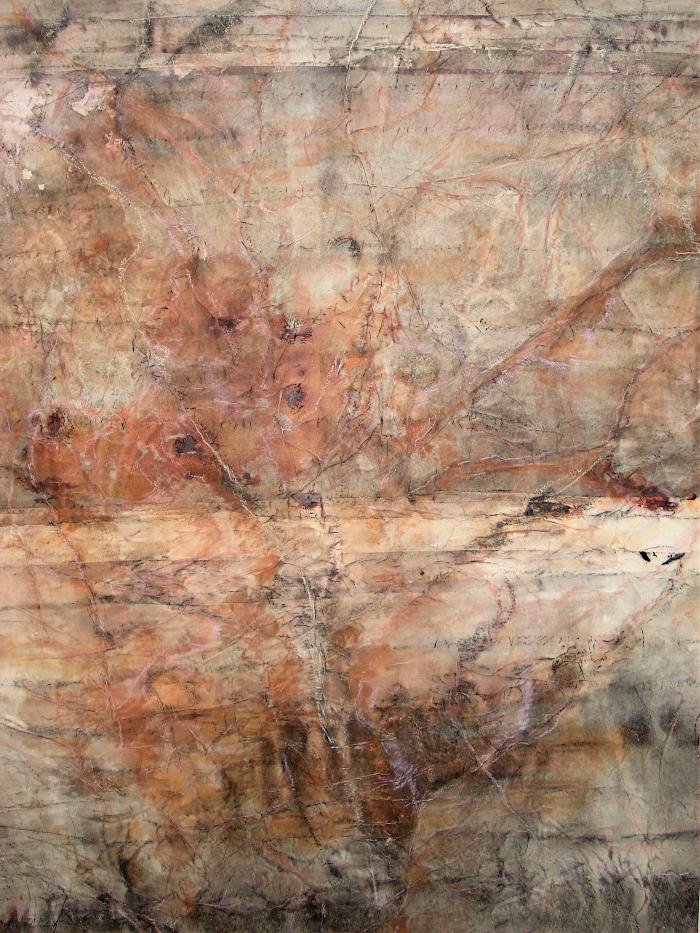
1998 - 2003 A Series based on the trail, the passage of a body seen from backwards, jointly with considerations on used material, and torn scraps.
Tombant en damier, 
 1999, encre de Chine et encre d'imprimerie, acrylique, fil de fer, dentelle, papier  Japon, 244 x 192cm
Tombant en damier,   1999, encre de Chine et encre d'imprimerie, acrylique, fil de fer, dentelle, papier  Japon, 244 x 192cm
-  Fallen checkered,  1999, Chinese  and printing ink, Iron, Japanese paper,...
Click to enlarge
Trois tombants à la cire
- Three fallen with wax 2003, Chinese ink, iron, wax, Japanese paper, on sheet, ...
Click to enlarge
Trois tombants grillagés
- Three fallen grating,  2000, Acrylic, India ink, Japan paper, metallic grid, ...
Click to enlarge
Schmates au papier goudron
Schmates  with tar paper,  1998, Printing  and Chinese ink, tar paper, scotc...
Click to enlarge
Grand Tombant
Grand Tombant
- The big fallen, 1997, printing ink, Chinese ink, iron, lace, Japanese paper, o...
Click to enlarge
Schmates à la tarlatane
- Schmates with tarlatan, 1998, Indian and printing ink, tar paper, tarlatan, f...
Click to enlarge

Shadows 'Fly in the ointment'

The sculptural materiality of the previous works, architecture of iron, fabric and paper, gives way in this new series to a set of more economical works. If the body remains the essential and throbbing question, it presents itself as an uncertain presence on the threshold of disappearance. Traces and gestures take over from the material: they extend the echo from table to table like so many shadows cast. Doubles of this primary body which seem to remind us, as Clément Rosset writes, that "every painter has the fundamental mission of succeeding or missing his self-portrait (... in the absence of any attempt to appear himself on the canvas)".'" By their fundamental ambiguity, the previous works escaped the name of painting. They affirmed the presence of a body oscillating between structure and disintegration, labile scaffolding of floating sheet, fragile epidermis of paper revealing paradoxical entrails. Table and stele at the same time, the table reappears. The layers of paper mounted on the canvas are, here, integral with their support and gives it a new rigidity. But, imperceptibly, the folds of the paper remind us of the affinities of the painting with the body. And it is the painting itself which becomes a body beyond all representation. The series then takes on its full meaning: it presupposes a search in movement that conjures and postpones the completion of the work. Each table carries with it the memory of all the tables in a thickness that is both depth and film surface. Likewise, the color that appears in recent works is not a surface, but diffuse and underlying, it seems to emerge from the depths. Subtle incarnation offering itself to the eye through the leafing of the diaphanous papers. Thus, the movement which explores, like an archaeologist in front of a field of excavations, the various implications of this interrogation on the body reveals to us how precious a work is when it manages, as here, to emerge from the depths of images his own questioning.

Thresolds

Suspended, heavy, sometimes animated by very slow waves which multiply the movement of the hanging bars, these sheets reflect in their weight, the gravity of the bodies they evoke. Footprints, body negatives, trunks without legs, without arms, without head, almost without sex. Body all the same, we recognize the torso, the attachment of a shoulder, the roundness of a hip. Evoking ancient embalming, burial in foreign lands, burials without a tomb, bodies without burial, blackened, burnt carcasses, the forms respond to each other from work to work, coming out of the sheets, by dint of overlays, or penetrating, turning with your back to the viewer, in a flat and flexible world, dark and pale, rough and soft. shrouds without face, are they old dead, memory of the dead or alive, doubled, glued, torn, patched up, supported at the limit of a past and a present, a present and of a future? Ravaudage, Catherine Ifergan.

'Schmates' photos, during the Memory Lane exhibition, Canton, July 2012.

Related Works (Thresholds)

See all works of this series →
Series that follows on from Schmates. The bodies hesitate on the threshold to penetrate, retreat or fade away. 
Work on canvas with Indian ink, engraving ink and pigments.
Tombant en triptyque
2003, Indian and printing ink, acrylic, laid down on canvas, 3 (174x73) cm
Click to enlarge
Apparition claire
Apparition claire
2004, Indian and printing ink, acrylic, plastic, mounted on canvas, 156x 66cm.
Click to enlarge
Le grand noir
Le grand noir
2005, Indian and printing ink, on canvas, 170x90cm.
Click to enlarge
Tombant noir au grillage
2002, Indian and printing ink, acrylic, screen, Japanese paper, on sheet, mounte...
Click to enlarge
Tombant recomposé
Tombant recomposé
1999, Indian and printing ink, Japanese paper, cardboard, on sheet, mounted on c...
Click to enlarge
Apparition sombre
Apparition sombre
2004, Indian and printing ink, acrylic, plastic, mounted on canvas, 156x 66cm.
Click to enlarge

Triptyque from Inside Lanscape

Discover in panoramic mode : https://nadinekohnfiszel.art/panosrc/index.pano.php

Related Works (Inside Landscape)

See all works of this series →
2012-2014 
Ink of China, spindle tree, pencils, acrylic, dry pastels, thread, wire, on fine felt fabric. 
20 panels of 0,93 m by 2,3 m and 4 panels of 1,5 m by 2,30 m.   
Complete length  of the whole:  27 m by 2,30 m.

Discover in panoramic mode : https://nadinekohnfiszel.art/panosrc/index.pano.php
06
06
Click to enlarge
10
10
Click to enlarge
14
14
Click to enlarge
18
18
Click to enlarge
22
22
Click to enlarge
27
27
Click to enlarge

Contact

46 rue de Cronstadt
75015 Paris

E-mail: nkohnfiszel@gmail.com
Phone: 33 6 07 44 29 56

For any information request or studio visit, please do not hesitate to contact me.

View all series

Series by theme